
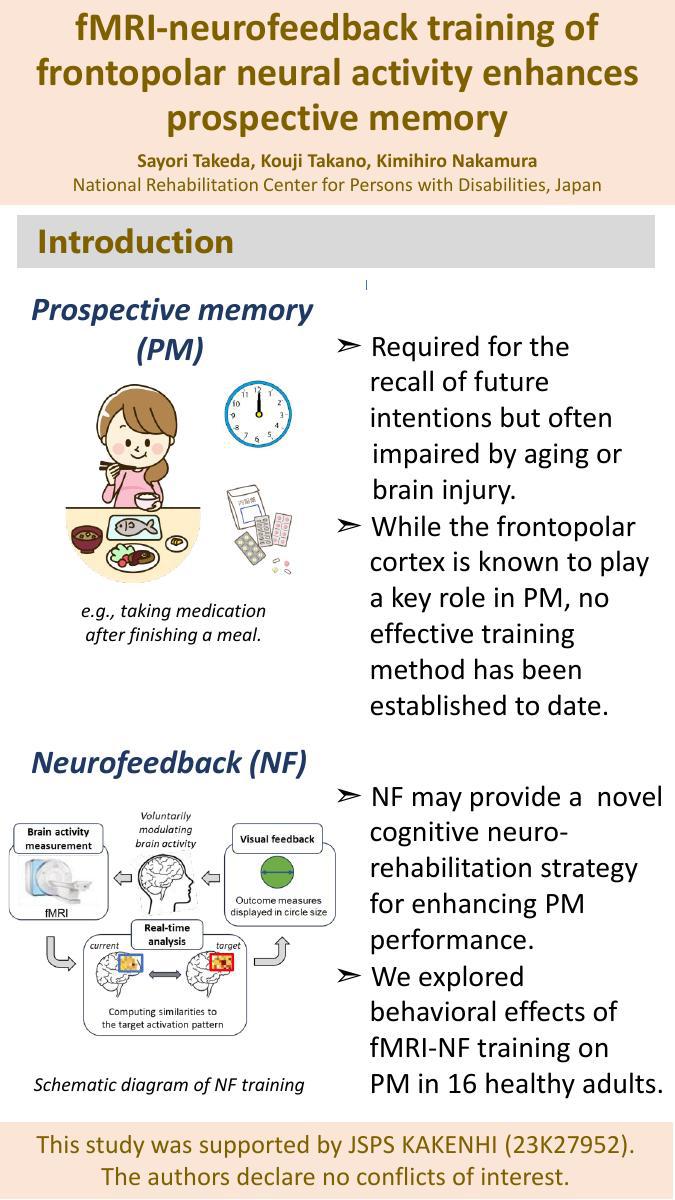
Introduction: Prospective memory (PM) required for the recall of future intentions is essential in many aspects of daily life but often impaired by aging or brain injury. While the frontopolar cortex (FP) is known to play a key role in PM, no effective training method has been established to date. Neurofeedback (NF) may provide a novel cognitive neuro-rehabilitation strategy for enhancing PM performance.
Objectives: To investigate the behavioral effects of fMRI-NF training on PM performance in healthy adults.
Methods: Sixteen right-handed participants volunteered for the study. They first performed a behavioral PM task in which deviant targets were presented during a background classification task (220 trials), underwent either a real or sham NF training (30 minutes) and again performed the same PM task. During the NF session, participants attempted to increase FP activity measured with real-time fMRI while receiving visual feedback. Neurobehavioral effects of NF were examined by comparing reaction times for the PM task and behavioral performance during NF between the two groups.
Results: We found that real NF training accelerated participants’ response by 102.90 msec, whereas behavioral enhancement was correlated with successful regulation of FP activity (r = -0.74, p =0.013). In contrast, sham NF produced no such behavioral change or correlation (r = -0.28, p = 0.64).
Conclusion: Our preliminary findings suggest that fMRI-based NF targeting FP activity enhances behavioral PM performance and may serve as novel and individually-customized tool for neurocognitive rehabilitation