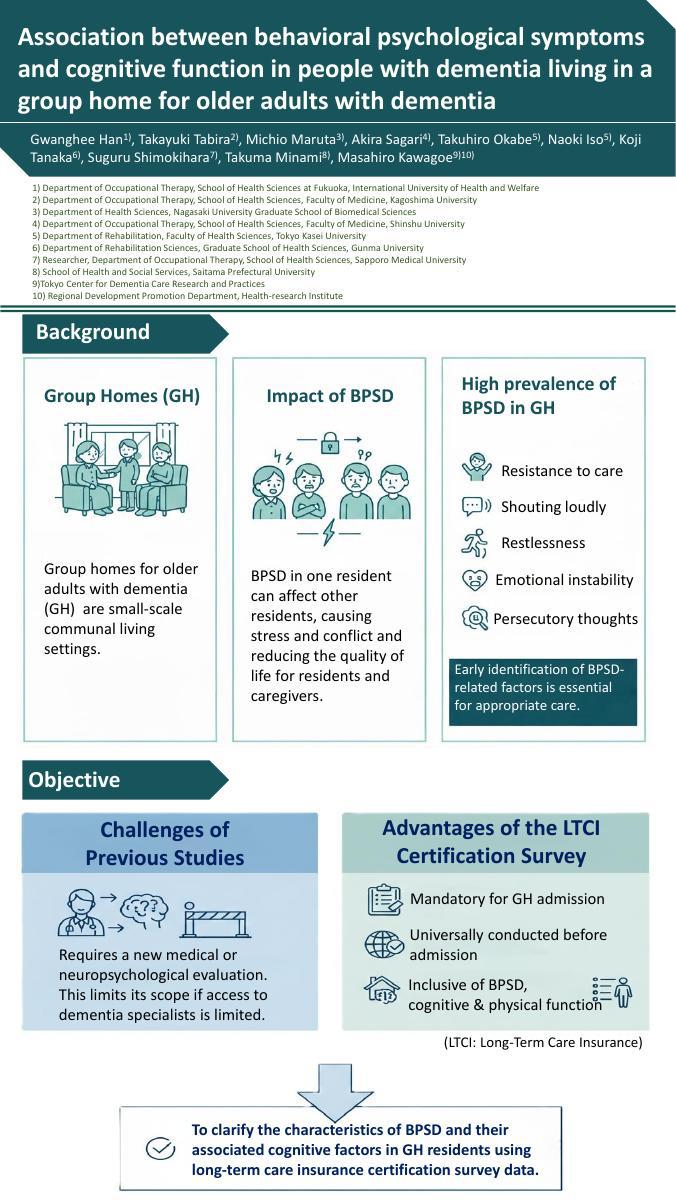
Introduction: Measures to address behavioral and psychological symptoms of dementia (BPSD) in group homes for older adults with dementia (GH) present a significant challenge. To gain admission to a GH, individuals must have long-term care insurance certification is required. Therefore, if factors associated with BPSD can be identified from the results of the long-term care certification survey—which includes various details such as BPSD and cognitive function—prompt intervention for BPSD may be initiated at the early stages of admission.
Objectives: This study aimed to examine the characteristics of BPSD and related factors in GH using the results of a long-term care certification survey.
Methods: Logistic regression analysis was conducted on 1,234 GH residents in City A, using BPSD items as the dependent variable and age, gender, and cognitive function-related items as independent variables. This study received approval from the Ethics Committee of Saitama Prefectural University (22005).
Results: The results indicated that “wandering” and “day/night reversal” were associated with “understanding the daily routine,” and “resistance to care” and “restlessness” were associated with “understanding the location". "Persecutory thoughts and behavior" was correlated with short-term memory, showing a higher incidence among females. “Shouting loudly” was more prevalent in males and may decrease as communicative competence declines.
Conclusion: The results of the long-term care certification survey confirmed the characteristics of BPSD and related factors. We believe that this finding will be instrumental in providing more timely and effective care for BPSD in older adults with dementia in GH.
