
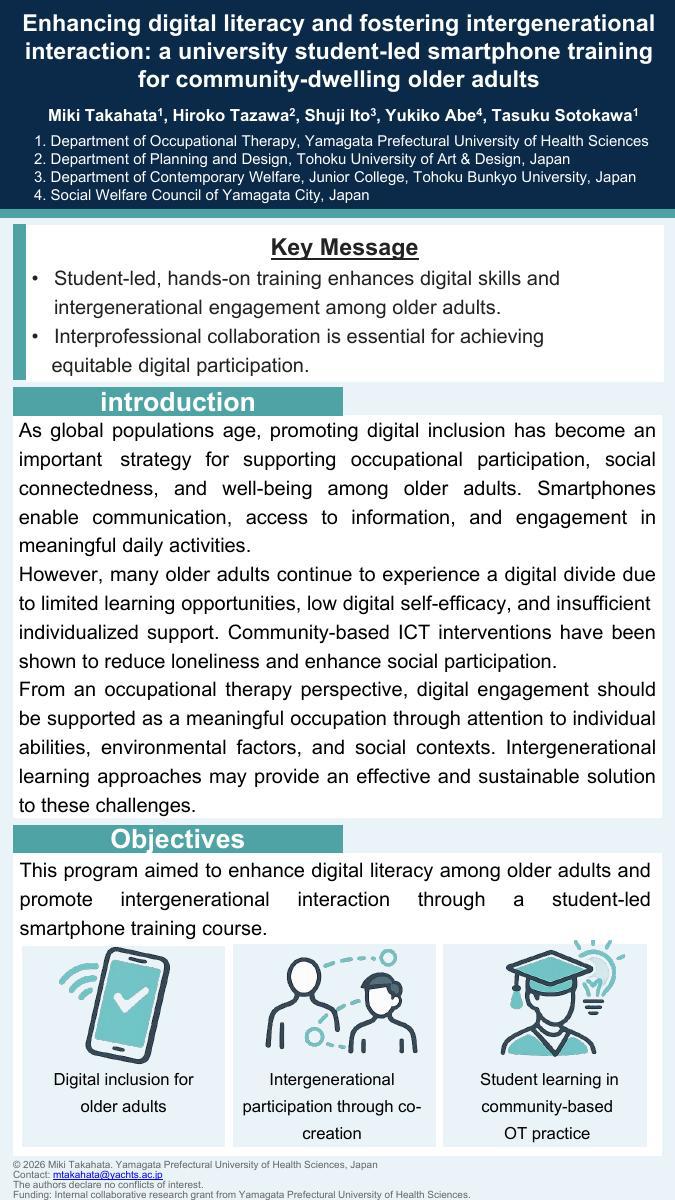
Introduction / Rationale: Smartphone ownership among the elderly is increasing. However, the digital divide remains a significant social issue, limiting access to digital resources and intergenerational communication.
Objectives: This program aimed to enhance digital literacy among older adults and promote intergenerational interaction through a student-led smartphone training course.
Methods / Approach: The program was managed by occupational therapists, a nurse, and a faculty member specializing in project planning. University students, including four medical/welfare and seven non-medical students, designed and conducted the training. The course was held three times over two months, featuring hands-on learning in small group settings. Participants primarily learned to use Dish Diary, a smartphone app for sharing meal records, through interactive demonstrations. Students guided older adults in small groups, addressing individual concerns and assisting with other smartphone applications.
Results / Practice Implications: Evaluation was conducted through surveys and text mining. Results indicated improvements in smartphone proficiency and increased willingness among older adults to interact across generations. Students also enhanced communication skills and gained a deeper understanding of older adults' digital needs. Collaboration between medical and non-medical students allowed for a diverse approach, though challenges arose due to some students' initial lack of familiarity with the needs of older adults.
Conclusion / Contribution to the occupational therapy profession: This study highlights the potential of university student-led digital literacy programs in improving older adults’ technological skills and fostering social participation. Occupational therapists played a key role in program facilitation, ensuring accessibility and engagement. Future efforts should focus on refining the curriculum, increasing sustainability, and expanding the program to contribute to broader community revitalization.