
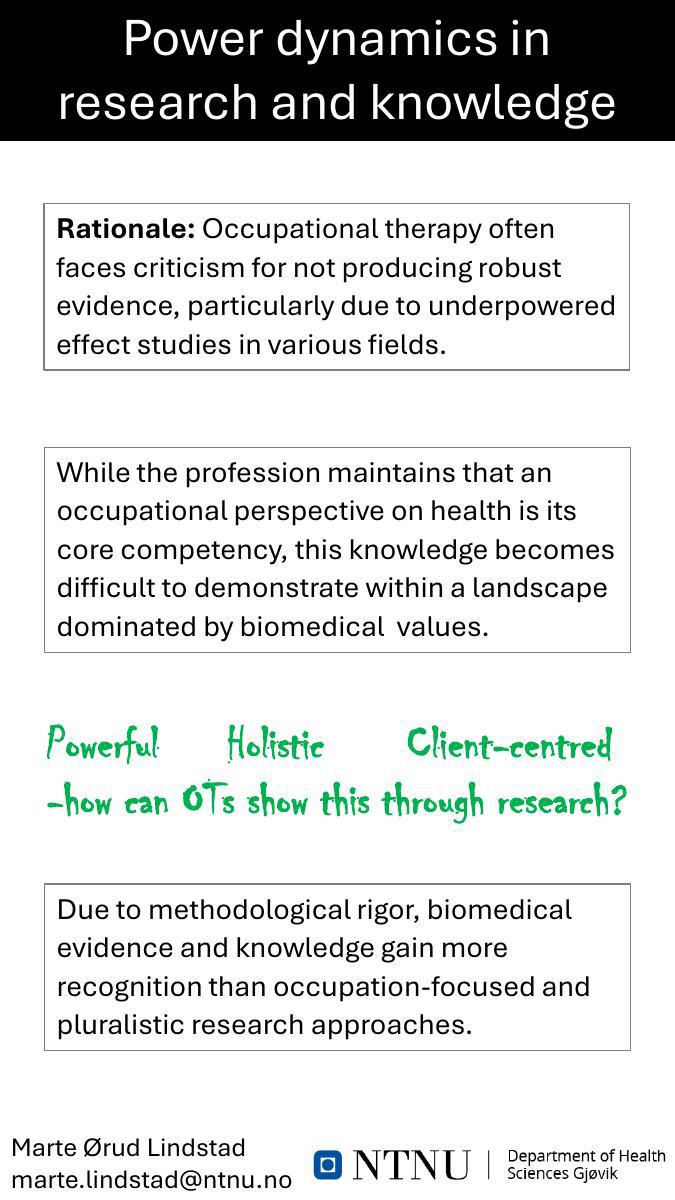
Rationale: Occupational therapy often faces criticism for not producing robust evidence, particularly due to underpowered effect studies in various fields. While the profession asserts that an occupational perspective on health is its core competency, this knowledge is caught between the dichotomies of biomedical and occupational perspectives. Due to methodological rigor, biomedical evidence and knowledge gain more recognition than occupational perspectives.
Objectives: This project aims to explore how power dynamics in research can lead to undervalued knowledge.
Approach: By conducting a literature review and gathering experience-based stories from journal submission processes and academic presentations, the project examines the pre-existing assumption that power dynamics influence research outcomes.
Practice Implications: The passive development of standardized and validated methods has resulted in limited recognition of occupational therapy outside the profession. This can create a vicious cycle of low confidence and difficulties in advocating for and articulating professional values when interacting with others. Systems like the Cochrane Database of Systematic Reviews often lead to research that prioritizes methodological rigor over practical clinical relevance. However, approaches are evolving with initiatives like Cochrane Rehabilitation, which supports diverse designs, and f clinical guidelines that incorporate a broader range of studies to inform their recommendations.
Contribution to the Occupational Therapy Profession: Understanding that not all intervention effectiveness can be studied through rigorous group methodologies can empower occupational therapists to confidently articulate the profession's contributions to health from an occupational perspective, rather than a biomedical one.