
Introduction
Speech is a common cognitive task performed daily alongside other activities. While previous studies suggest that it affects both lower and upper limb performance, the differences in interference caused by speech between them under similar dual-task conditions remain unknown.
Objectives
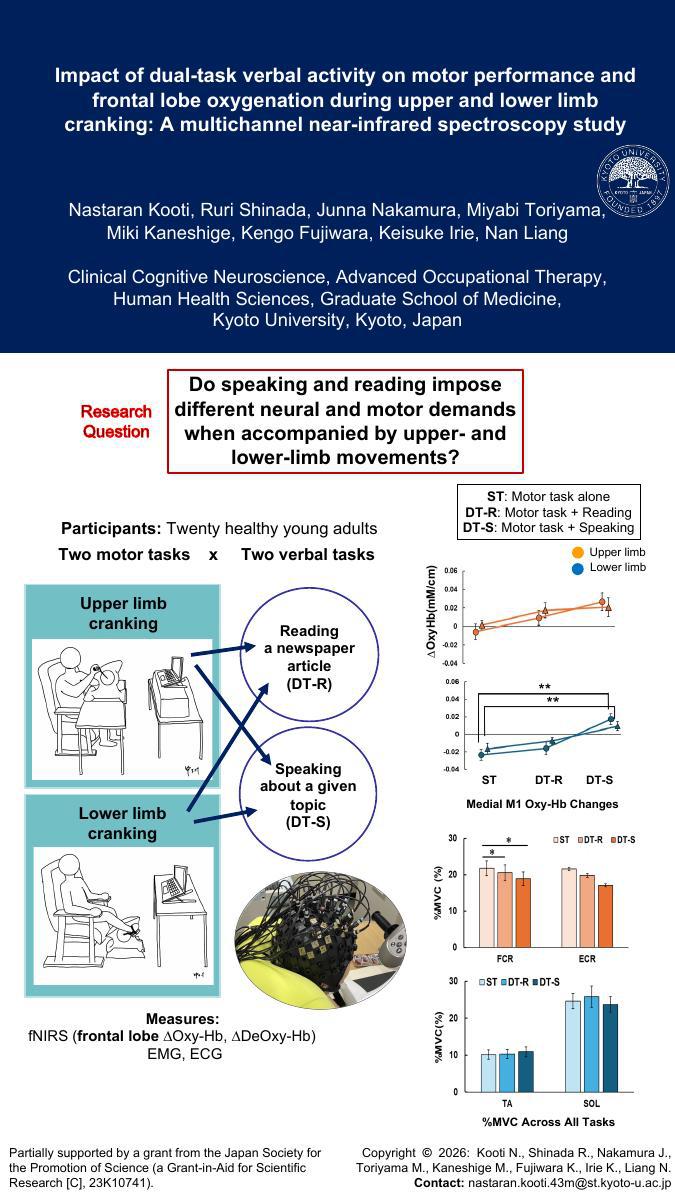
This study compares the hemodynamic changes during dual-task performance in upper and lower limb cranking exercises and two verbal tasks (reading aloud and speech).
Methods
Twenty healthy adults (8 men, 24.7±2.74 years) participated. They performed controlled-pace arm and leg cranking using an ergometer in three conditions: single motor task, dual-task speech, and dual-task reading. Static reading and speech tasks were also performed as control conditions. Motor performance was measured using an accelerator and surface electromyography of the agonist muscles, while exercise intensity was determined by electrocardiogram and Borg rating of perceived exertion. Changes in the oxygenated hemoglobin (∆Oxy-Hb) and deoxygenated hemoglobin (∆DeOxy-Hb) concentrations in the frontal lobe were recorded by functional near-infrared spectroscopy (fNIRS) in all participants.
Results
Upper limb muscle activity significantly decreased during dual-task and was more affected by cognition compared to lower limb. No significant differences were observed in the supplementary motor area or premotor cortex between the limbs across all conditions. In the prefrontal cortex, ∆Oxy-Hb decreased in dual-task reading but increased during dual-task speech in the upper limb, whereas both dual-task conditions caused an increase in the lower limb.
Conclusion
These results suggest that both muscle and brain activity differ between the upper and lower limbs, providing valuable insight into dual-task mechanisms relevant to daily life.