
Introduction: Physical activity promotion is effective in the prevention of frailty. However, the effects of a multifactorial approach incorporating exercise, nutrition, and social participation, with goal setting and feedback on physical activity and independent living remain unclear.
Objective: The objective of this study is to clarify changes in physical activity after multifactorial approach with goal setting and feedback.
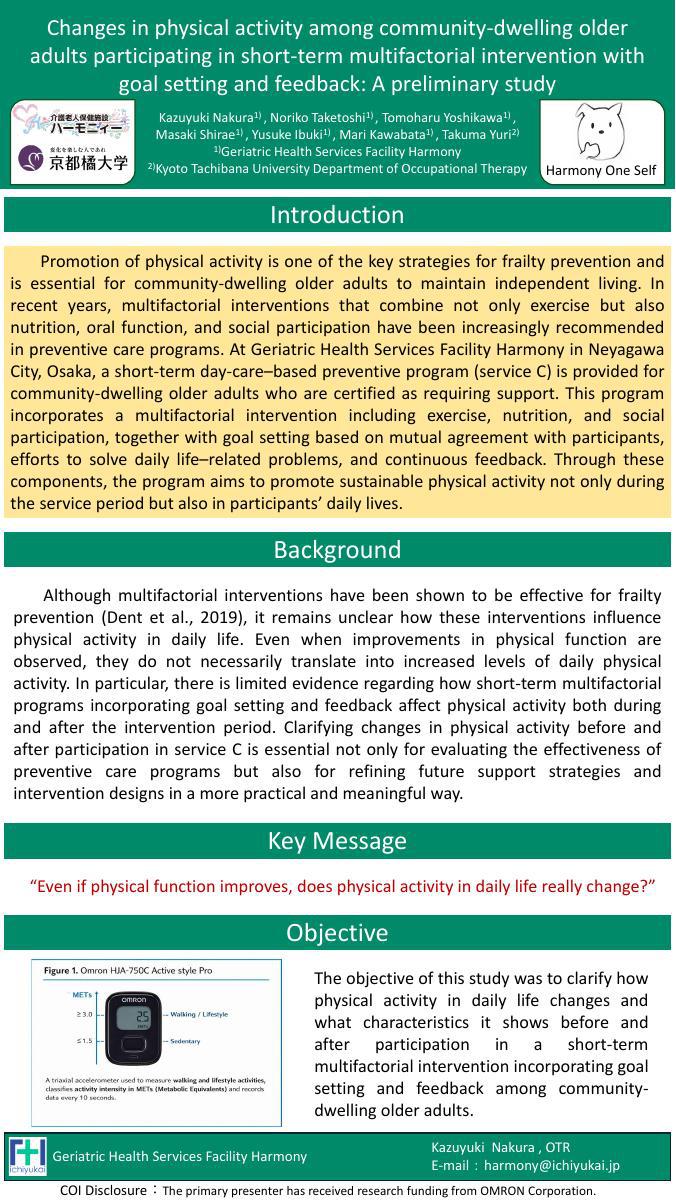
Methods/Approach: Twenty-eight community-dwelling older adults (mean age 82.1±5.7) participated in the short-term multifactorial approach with goal setting and feedback. This approach was scheduled once a week for a total of 12 sessions. Physical function was measured by Timed-up and go test (TUG). Frailty status was assessed by Kihon Check List. Physical activity was measured using the triaxial accelerometer.
Results: Before the intervention, 19 participants (67.9%) were classified as frail, 9 (32.1%) as pre-frail, and 0 (0%) as robust. After the intervention, among the 23 participants with available
Kihon Check list, 15 (65.2%) were frail, 5 (21.7%) were pre-frail, and 3 (13.0%) were robust (p =.125). TUG improved significantly (12.8±3.8 to 10.0±3.0 sec, p<.001). Light (1.6-2.9METs) and moderate to vigorous physical activity (≧3METs) were increased and sedentary behavior (≦1.5METs) decreased (p<.001). Notably, 25 participants (89.3%) became independent living in a longstanding community after the intervention.
Conclusion: The short-term multifactorial approach with goal setting and feedback increased physical activity and improved frailty status, which suggested that the short-term multifactorial approach with goal setting and feedback would be effective as the physical activity promotion and the approach for independent living in community-dwelling older adults.