Introduction
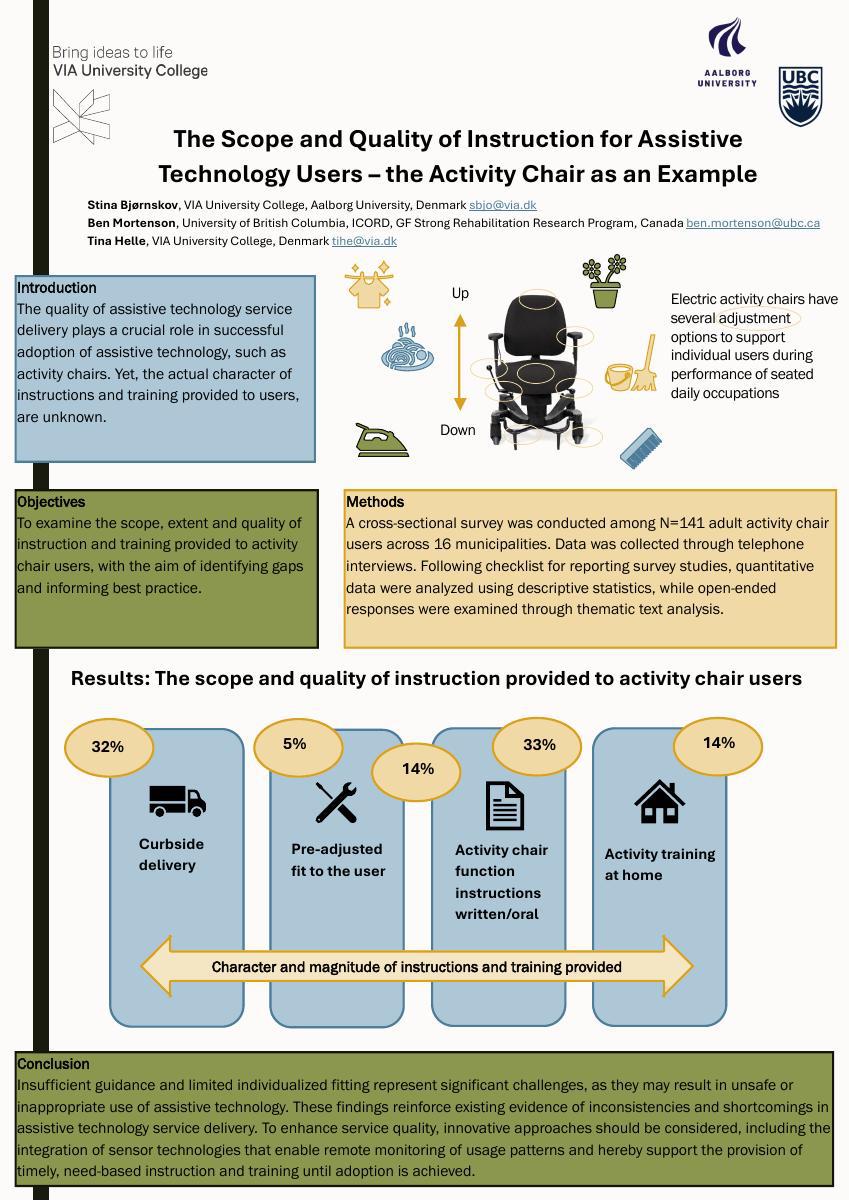
The quality of assistive technology service delivery plays a crucial role in the successful adoption of assistive technology, such as activity chairs, which support seated daily activities among people living with physical functional limitations.
Objectives
This study examines the scope, extent and quality of instruction and training provided to activity chair users, with the aim of identifying gaps and informing best practice.
Methods
A cross-sectional survey was conducted among N=141 adult activity chair users across 16 municipalities. Data was collected through telephone interviews using a study-specific questionnaire. Following checklist for reporting survey studies, quantitative data were analyzed using descriptive statistics, while open-ended responses were examined through thematic text analysis.
Results and implications
Findings revealed considerable variability in the level of instruction and training received. A total of 32% of participants experienced "curbside delivery" without any guidance on set-up or use, while 5% received a pre-adjusted activity chair but no further instruction. Approximately 33% were provided with oral and/or written guidance, and 14% received both pre-adjustment and instructions. Notably, only 16% underwent activity-based training in their home environment.
Conclusion
Inadequate guidance and a lack of individualized fitting are especially problematic, as they can lead to unsafe and inappropriate use. These findings add to existing evidence highlighting inconsistencies and deficiencies in assistive technology service delivery. To improve assistive technology service delivery, innovative solutions such as sensor technology could be explored, enabling and ensuring timely instruction and training based on user needs.
