
Introduction / Rationale: Environmental and personal factors and performance patterns influence occupational performance and participation among clients. Given evidence of low implementation rates, it is essential for occupational therapy practitioners to ensure alignment between assessment, treatment plan, and recommendations.
Objectives: This study aimed to analyze and describe home environment assessment and recommendations reports of children with developmental disabilities in a rural area in Bulacan.
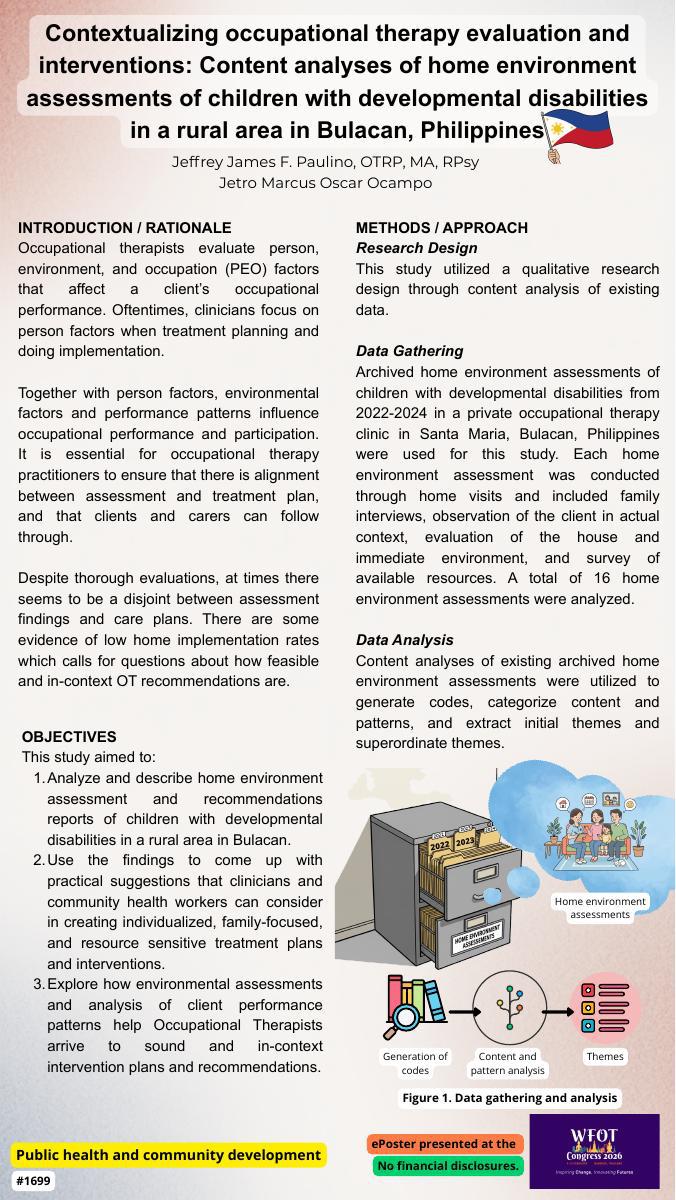
Methods / Approach: Content analysis was used to analyze 16 home environment assessment records of children with developmental disabilities who are from low to middle-low income families from 2022-2024 in Santa Maria, Bulacan, Philippines. Each home environment assessment was conducted through home visits and interviews. Codes, patterns, and themes were extracted.
Results / Practice Implications: Contexts and performance patterns are clustered into six themes: compact and limited living space and resources, variable community resources and accessibility to services, extended family ties and support system, limited play and social interactions and opportunities, multiple caregiver roles, stress, and capacity, and challenges adhering to routines.
Intervention plan and programs revolve around three general strategies: resource sensitive home modifications, caregiver capacity training, education and role delegations, and routine and time management.
Findings suggest that home environment assessments can help occupational therapists come up with specific, contextual, and congruent intervention strategies that are anchored to the client’s profile and environmental context and resources.
Conclusion / Significance to the Occupational Therapy Profession: Contexts and performance patterns are important domains of occupational therapy. Actual home environment assessments on top of in-center evaluations may help occupational therapists identify strategies that are more contextual, practical, and effective to increase implementation rate and follow-up.