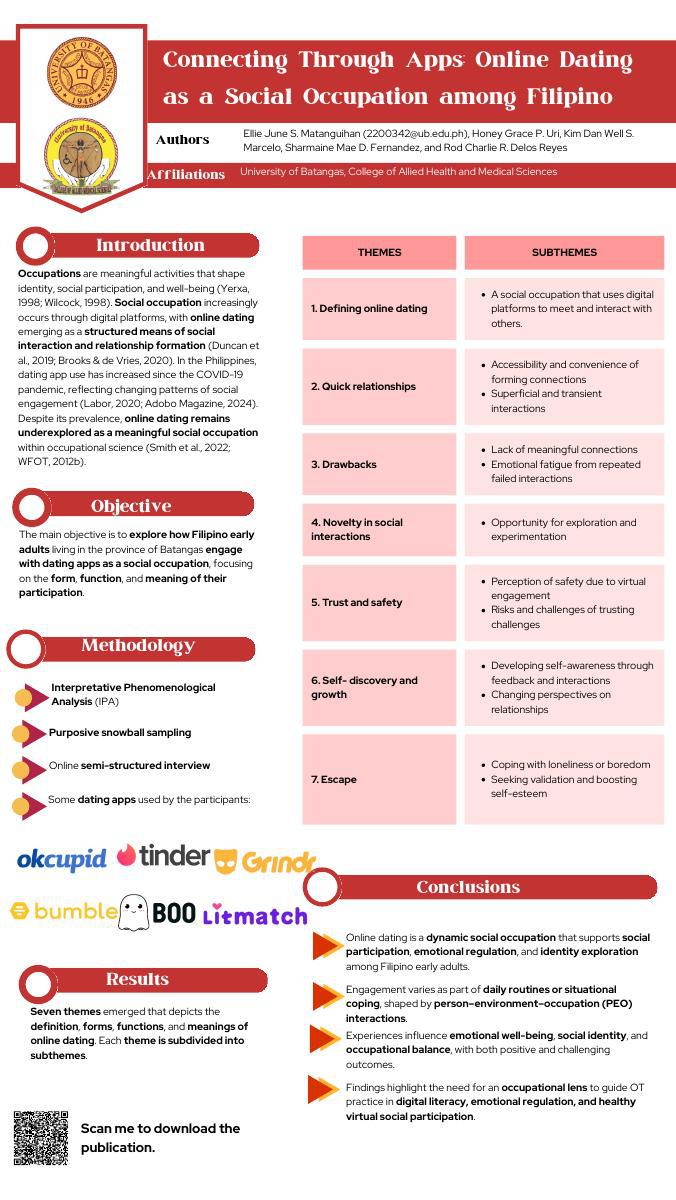
Introduction / Rationale: Occupational science examines human occupation, its influence on identity, well-being, and social participation. Social occupation, a core aspect of occupational engagement, involves activities that foster interaction and connection. Online dating, a social occupation, is facilitated through platforms like Tinder, Bumble, and OkCupid, which structure interactions through digital features. In the digital era, social participation expanded beyond physical spaces, with Filipinos ranking among the highest global users of dating apps. Despite this trend, research on online dating as a social occupation remains limited.
Objectives: This study explores how dating apps help build connections, fulfill social needs, and impact identity and well-being. It also examines user motivations and challenges like safety concerns, providing insights for occupational therapy interventions on digital literacy and social coping skills.
Methods / Approach: This qualitative study used interpretative phenomenological analysis (IPA) to explore the experiences of Filipino adults aged 20–40 years old using dating apps. Participants from rural and urban areas were recruited via snowball sampling. Semi-structured interviews were conducted, and both deductive and inductive reasoning were utilized
Results / Practice Implications: Seven themes emerged which were categorized into definition, forms, functions, and meanings of online dating. Each theme is subdivided into subthemes. The themes are defining online dating, quick relationships, drawbacks, novelty in social interactions, trust and safety, self-discovery and growth, and escape.
Conclusion / Contribution to the occupational therapy profession: This study highlights online dating's role in fostering participation, emotional regulation, and identity exploration. It expands the understanding of digital social interactions beyond technology use, emphasizing how online dating shapes human occupations, social participation, and emotional experiences in contemporary society.
