
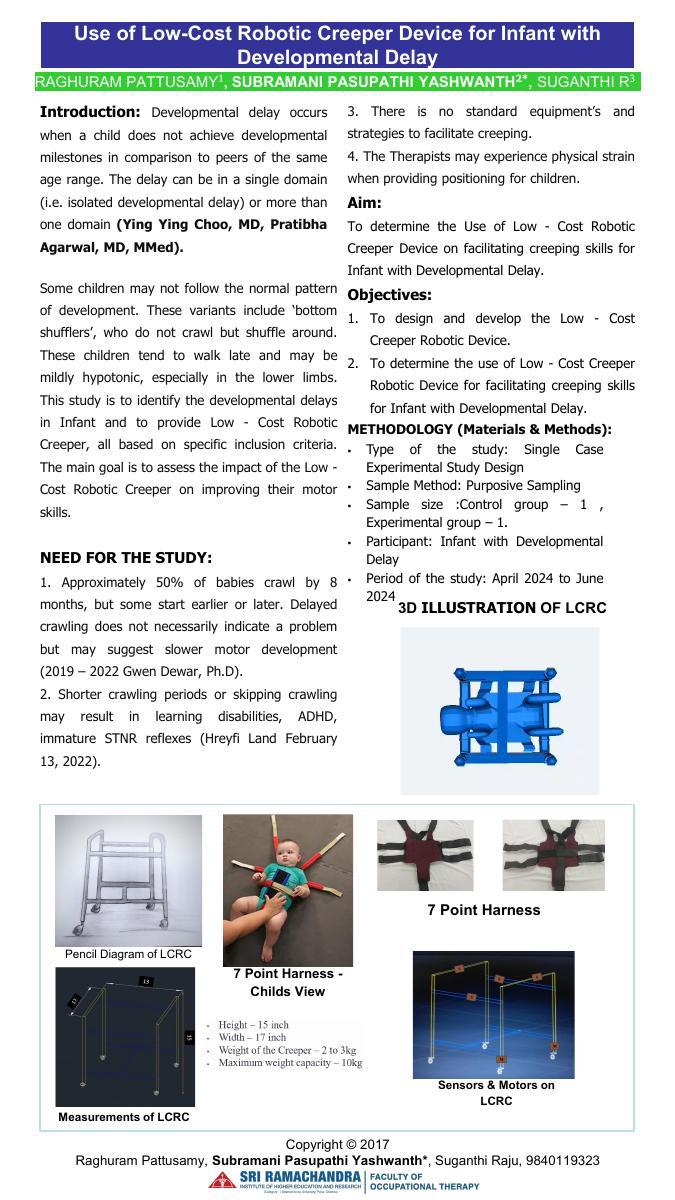
Introduction / Rationale: Developmental delay affects milestone achievement across various domains, such as delayed walking or lower limb hypotonia. Crawling is a crucial motor milestone, typically achieved by 50% of infants by 8 months. Delayed or skipped creeping phases may contribute to future learning difficulties, including ADHD. Occupational therapists play a vital role in motor development, but existing equipment for creeping is limited. This study examines the effectiveness of a Low-Cost Robotic Creeper (LCRC) in enhancing motor skills in infants with developmental delays.
Objectives: This study aimed to design and develop a Low-Cost Robotic Creeper (LCRC) and evaluate its effectiveness in facilitating creeping skills in infants with developmental delays.
Methods / Approach: A single-case study involving an infant with developmental delay was conducted at Prema Vasam, Chennai. The Peabody Developmental Motor Scales-2 (PDMS-2) were used for pre- and post-assessment. The intervention included 12 sessions over four weeks, combining conventional Occupational Therapy with LCRC-assisted creeping training.
Results / Practice Implications: The intervention led to notable motor skill improvements. The locomotion age equivalent increased from 5 to 8 months, and the raw score improved from 25 to 40. These findings suggest that integrating LCRC with Occupational Therapy can enhance creeping milestones in infants with developmental delays.
Conclusion / Contribution to the occupational therapy profession: The LCRC device offers a cost-effective intervention to support infant motor development. Its use in Paediatric Occupational Therapy could facilitate milestone achievement and reduce the risk of future developmental concerns.