
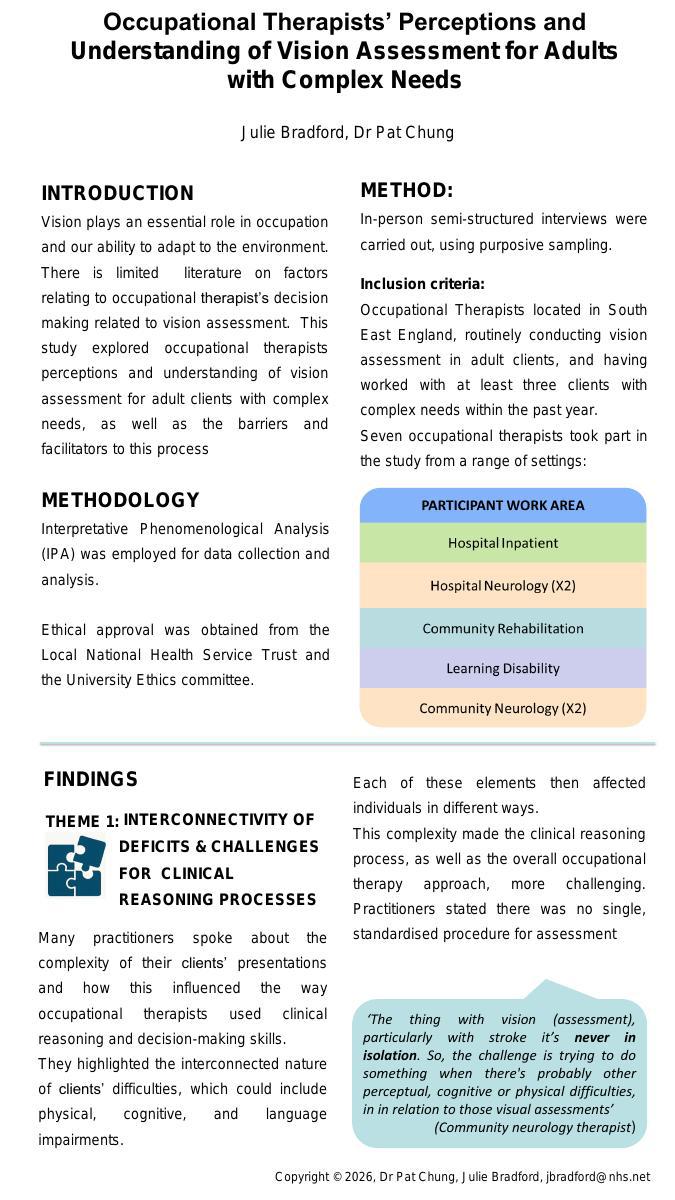
Introduction/ Rationale: Vision is crucial to occupation and environmental adaptation. Literature reveals a poor understanding of the complexity of vision assessment for adults with complex needs, and limited detail on factors relating to occupational therapist’s decision making.
Objectives: To explore occupational therapists’ perceptions and understanding of vision assessment for adult clients with complex needs, as well as barriers and facilitators to this process.
Methods/ Approach: Using an Interpretive Phenomenological Analysis (IPA) approach, 7 occupational therapists were purposefully recruited from a set geographical area in England and participated in semi structured interviews. IPA guided the thematic analysis.
Results/Practice Implications: 3 themes emerged: Working with complex clients, assessment methods, and factors affecting the process. Sub-themes highlighted the complexity of clients' presentations and their interrelated deficits, impacting clinical reasoning. Vision assessments varied, with a preference for a functional, top-down approach and minimal use of standardised assessments. Occupational therapists relied on questioning clients about their difficulties. A supportive interdisciplinary team was valued, yet collaboration with vision specialists was limited. Learning occurred mostly through peer support. Systemic challenges including continuity of care concerns, and environmental limitations including remote working and isolation affected assessment practices and professional development.
Conclusion/ Contribution to the occupational therapy profession: Occupational therapists need to adopt a multimodal approach to vision assessment. Standardised assessments and structured tools should guide effective interventions using appropriate clinical reasoning. Interdisciplinary learning could be enriched by using digital platforms and forums. Successful vision assessment for adults with complex needs would be enhanced by working with other relevant professionals. There are implications for occupational therapy practice in this specialist field.