
Introduction / Rationale: Acute care settings provide a unique opportunity to address both mental health and physical function, as early Occupational Therapy (OT) interventions help prevent depression and anxiety (Pisegna et al., 2022). The OT approach enhances occupational performance and health outcomes across various domains (D’Amico et al., 2018). However, many OTs underutilize their psychosocial skills due to barriers such as time constraints, productivity demands, limited education, and a focus on physical recovery (Simpson et al., 2018; Pisegna, 2022). While 68% of OTs in stroke rehabilitation prioritize mental health, only 56% feel satisfied with the care they provide, and just 22% pursue further psychosocial training (Simpson et al., 2018). Mentorship can bridge these gaps by fostering knowledge translation and practitioner confidence (Doyle et al., 2019).
Objectives:
- Learn effective strategies for disseminating educational content and developing a mentorship program that integrates psychosocial interventions into OT acute care practice.
- Apply evidence-based psychosocial interventions across acute care populations to enhance patient outcomes and reinforce the distinct role of OT.
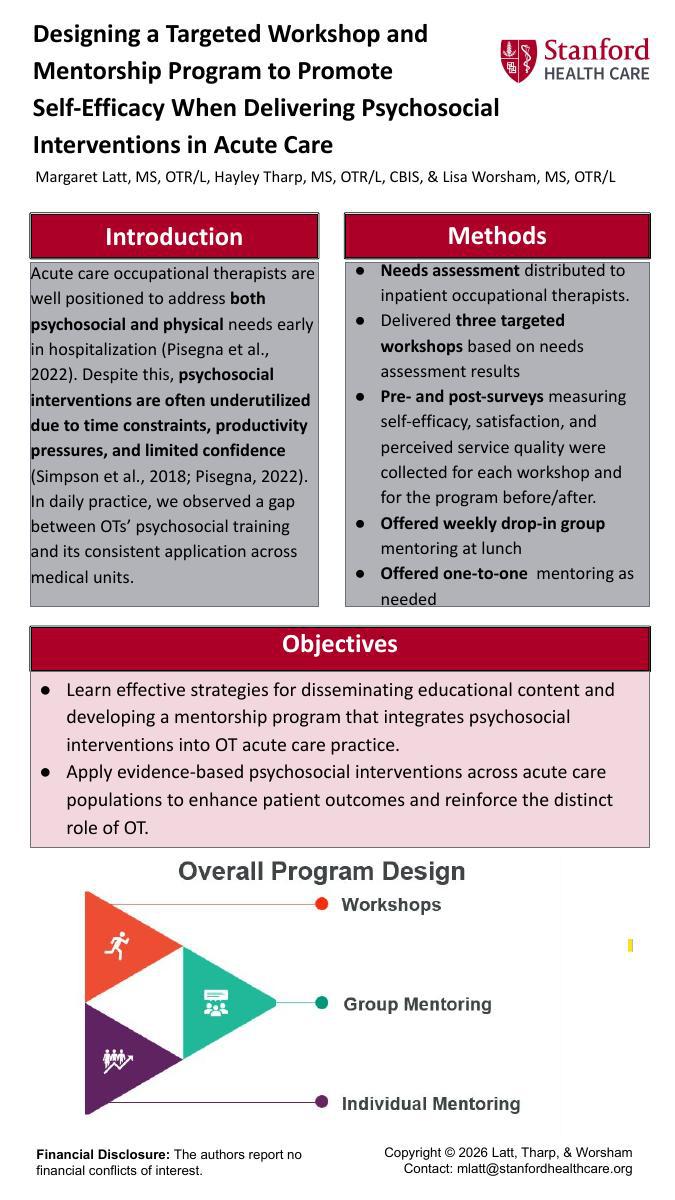
Methods / Approach: Workshops and mentoring sessions targeted gaps in provider knowledge and confidence related to addressing psychosocial needs. Pre- and post-surveys measured self-efficacy in assessing and delivering psychosocial interventions, as well as knowledge integration into practice.
Results / Practice Implications: Post-survey results showed a 16% increase in self-reported confidence and a 15.4% improvement in service quality. Additionally, 100% of participants were satisfied with the program, and 96% of workshop attendees learned new strategies for assessing psychosocial needs.
Conclusion / Contribution to the occupational therapy profession: OTs responded positively to mentorship, demonstrating improved confidence in addressing psychosocial needs in acute care.