
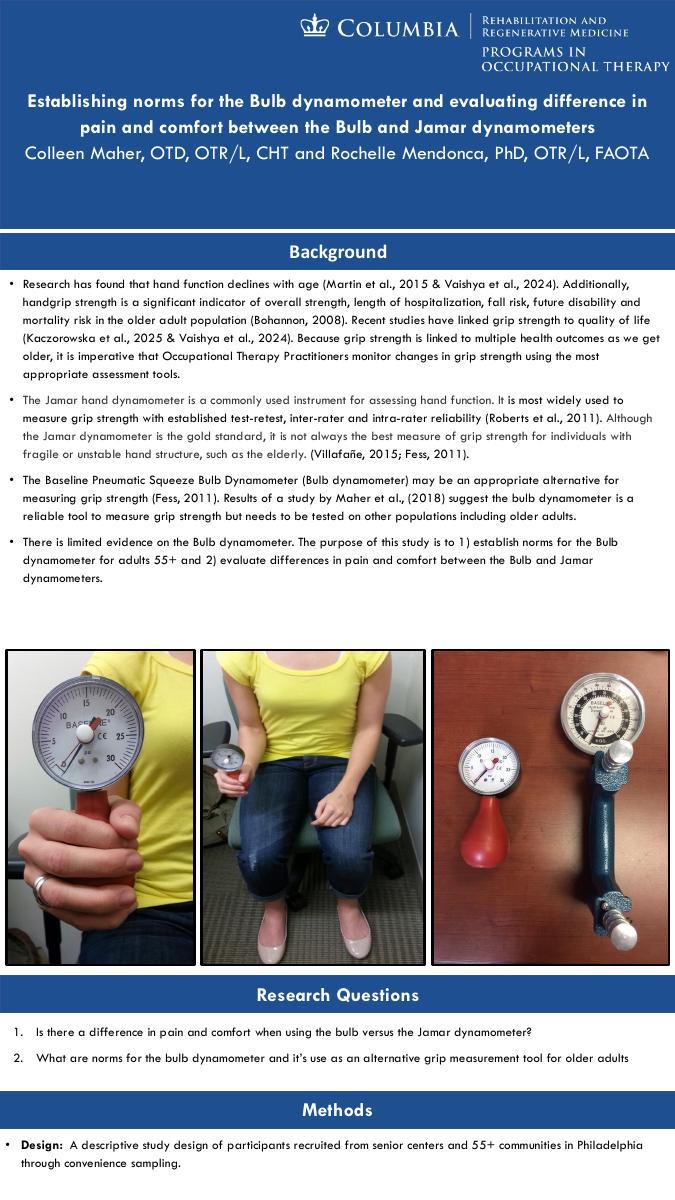
Introduction: The Jamar hand dynamometer is a commonly used instrument for assessing hand function. Although the Jamar dynamometer is the gold standard, it is not always the best measure of grip strength for individuals with fragile or unstable hand structure, such as the elderly.
Objectives: This study established norms for the bulb dynamometer for the older adult population and evaluated the differences in pain and comfort between using the bulb or the Jamar dynamometer for grip strength.
Methods: This study recruited three hundred eighty-six participants aged 55 and older. Two instruments were used following a standardized protocol: the Bulb Dynamometer and the Jamar Dynamometer. Participants were randomized to either the Jamar or the Bulb dynamometer first, followed by the second dynamometer. Visual analog scales were used to measure both pain and comfort. Paired sample t-tests were used to evaluate if there were differences. Means and standard deviations were used to report norms.
Results: Norms were obtained for the bulb dynamometer. Results showed significant differences in pain and comfort when the bulb dynamometer compared to the Jamar dynamometers (p<0.05). The bulb dynamometer was less painful (Bulb-1.37, Jamar-2.38) and more comfortable (Bulb-2.63, Jamar-4.28) to use compared to the Jamar dynamometer. Regression analyses showed that age and gender were significant predictors of grip strength for both dynamometers (p<0.05).
Conclusion: The bulb dynamometer might be less painful and more comfortable to use, especially for the older adult population. The preliminary norms can be used by clinicians when using the bulb dynamometer.