
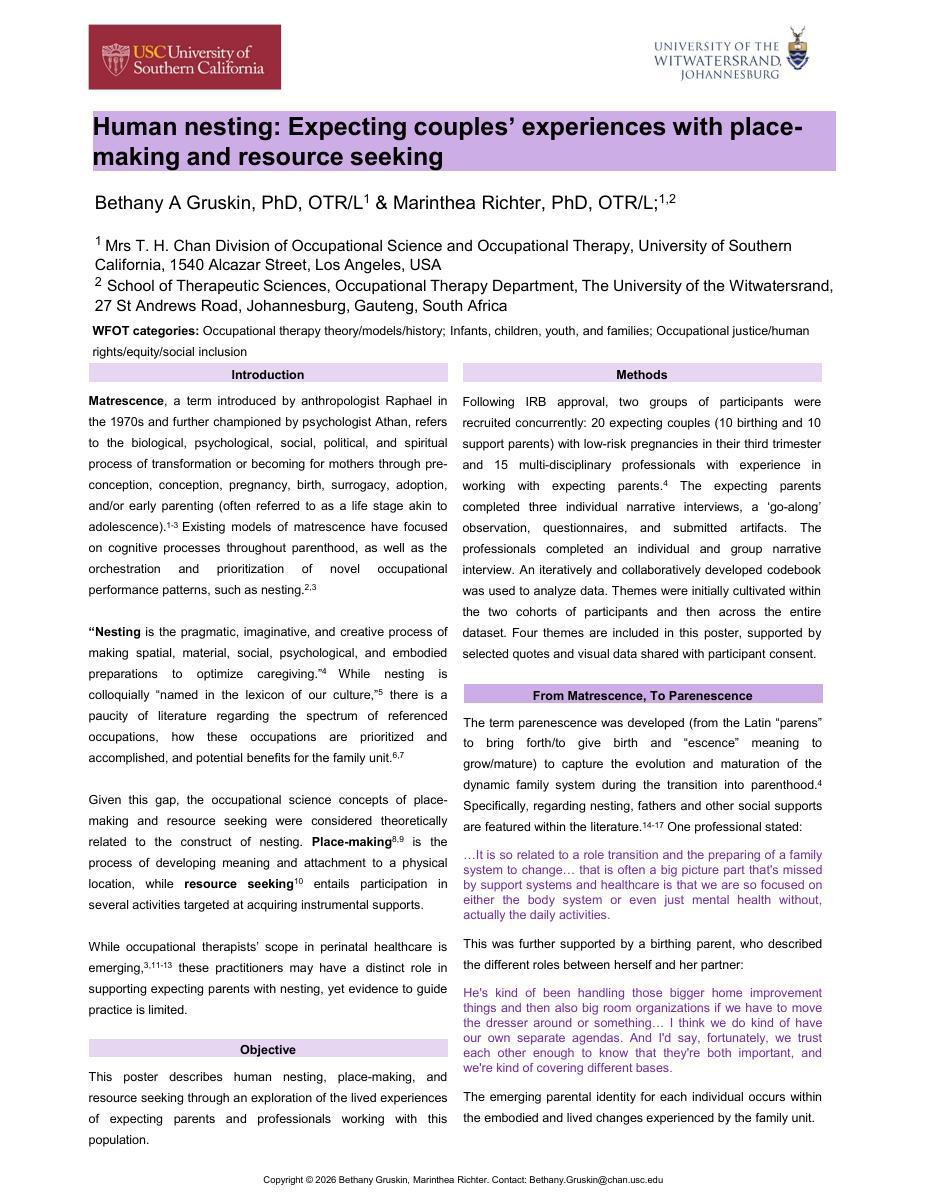
Introduction/Rationale: Perinatal occupational therapy is an emerging area of practice focused on the well-being of family systems. Nesting is proposed as a novel concept related to the physical, social, and emotional preparations for the arrival of a newborn. Within occupational science, nesting builds upon the theoretical foundations of place-making and resource seeking.
Objectives: To introduce an evidence-based model of human nesting.
Methods/Approach: A model is proposed based on data synthesized from narrative interviews with professional experts (n=15) and expecting couples (n=10 couples, 20 parents total) from the United States, as well as findings of a parallel literature review.
Results/Practice Implications: Birthing and support parents both engaged in nesting, which occurred from preconception to postpartum. Providers and expecting parents perspectives’ foregrounded changes in occupational engagement, including alterations in daily routines, social support needs, and divestiture/acquisition of materials. Preparatory activities seemed to prepare the physical space, as well as facilitate the transition into new parental identities.
Conclusion/Contribution to the occupational therapy profession: Based on the results, a model of human nesting is proposed to capture important elements of preparing for an infant from an occupational science perspective. By integrating existing knowledge of perinatal cognitive and biological changes, a deeper understanding of occupational engagement during this time can be facilitated. More research is needed to evaluate trajectories and therapeutic support needs across the perinatal period, investigate disruptions and barriers to nesting, and determine relationships with family outcomes, such as postpartum depression, parent-infant attachment, and developmental impacts.