
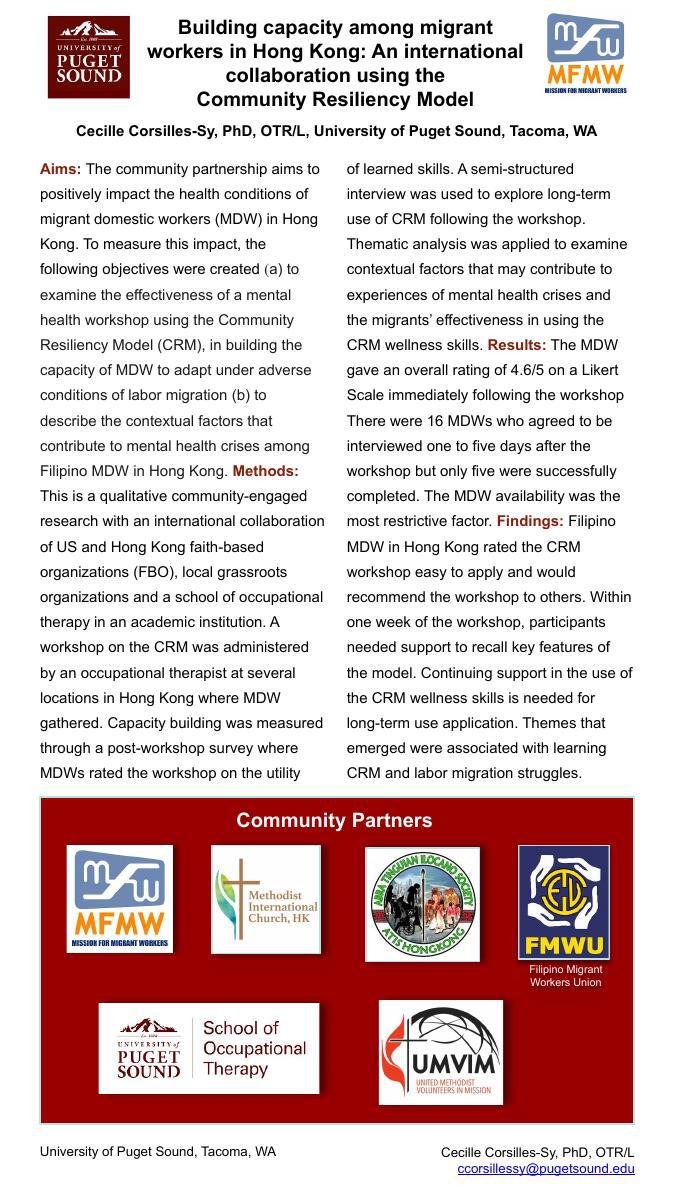
Introduction: Migrant domestic workers in Hong Kong are under tremendous stress. Sociopolitical and socioeconomic conditions place them at high risk of labor trafficking, and limited support has led to a mental health crisis in their communities. Urgent needs brought support from non-governmental, faith-based, and local grassroots community organizations. With a common goal of increasing capacity for the migrant communities, a collaboration was developed to build resilience to trauma with a social justice perspective.
Objectives: Describe the development of an international community-engaged partnership to address the mental health crisis in communities of migrant domestic workers. Describe the compounding contextual factors and the disruption of performance patterns that contribute to trauma. Describe the resilience justice model to support the capacity-building for migrant communities.
Approach: An occupational therapist from a US-based liberal arts university partnered with an international mission organization after an invitation to respond to a mental health crisis in the local migrant communities. Local grassroots community organizers were invited to collaborate following a community analysis that showed how oppressive systems contribute to the continuing trauma. Descriptive methods were used to measure changes in the self-efficacy of migrant workers and goal attainment scales for collaborators.
Practice Implications: Occupational therapist have opportunities to offer occupational justice that can impact groups and populations by engaging with communities working to build their capacity to transform their lives.
Conclusion: A strength-based approach to community resilience training requires a justice lens to address the root causes of the problems leading to trauma. Local grassroots community organizers and faith-based organizations provide expertise in contextual factors essential to health promotion and disease prevention to impact global health.