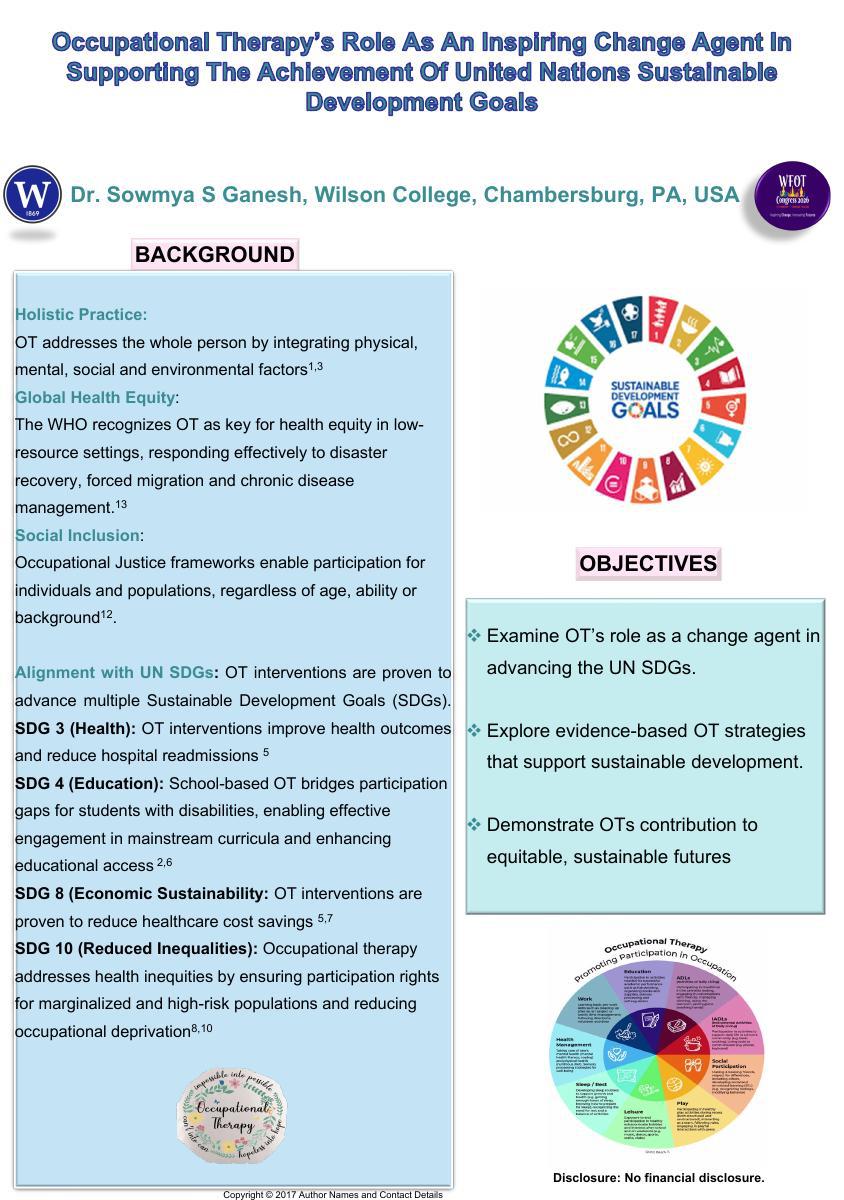
Introduction / Rationale: Occupational therapy (OT) as a profession can play a crucial role in advancing the United Nations Sustainable Development Goals (SDGs) by promoting health, well-being, and social inclusion for all individuals, regardless of age, ability, or background. This poster will highlight OT’s client-centered, holistic approach as a transformative force in addressing global challenges.
Objectives: The primary objective is to explore OT’s potential as a change agent in achieving SDGs, and specifically those related to health and well-being (SDG 3), quality education (SDG 4), reduced inequalities (SDG 10), and sustainable cities and communities (SDG 11). This poster will review OT’s contributions toward gender equality (SDG 5) and decent work (SDG 8) through empowerment and advocacy.
Methods / Approach: This poster will present literature review of research based articles, author's personal experiences across borders and case studies that highlight innovative practices, including the use of assistive technologies, community-based interventions, and cross-disciplinary collaborations. Synthesized evidence from diverse settings across global borders will capture the role of OT’s impact on individual and community resilience.
Results / Practice Implications: Findings reveal that OT interventions foster social participation, independence, and resilience, contributing significantly to the development of equitable, sustainable futures. These practices not only address multifaceted individual needs but also facilitate broader social change and inclusion.
Conclusion / Contribution to the Occupational Therapy Profession: It is pivotal to enhance the evolving role of OT in expanding and shaping a sustainable and equitable future across global communities. OT can empower communities to drive systemic transformation through evidence based interventions, collaboration, program development, advocacy and justice, inspiring change in the area of practice and innovating global futures through alignment with UN.
