
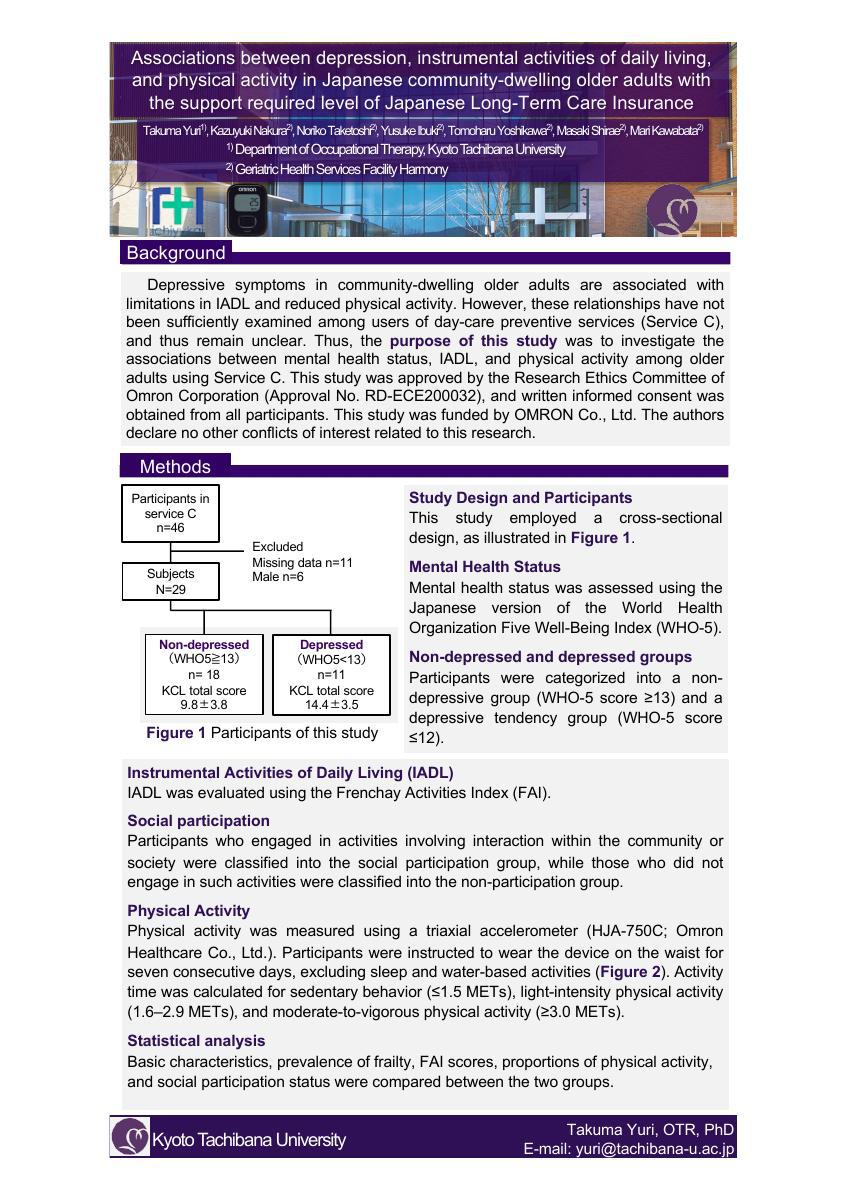
Introduction / Rationale: Depression in community-dwelling older adults is associated with limitations in instrumental activities of daily living (IADL) and reduced physical activity. However, these relationships remain unclear in older adults with the support required level of Japanese Long-Term Care Insurance (LTCI).
Objectives: The objective of this study was to investigate associations between mental health, IADL, and physical activity in Japanese community-dwelling older adults with the support required level of LTCT.
Methods: This cross-sectional study included 29 female community-dwelling older adults (mean age 81.3±5.5 years). Mental health was assessed using the Japanese version of World Health Organization-five well-being index, and participants were classified into depressed and non-depressed groups with a cutoff of ≤ 12. IADL was evaluated using the Frenchay Activities Index (FAI), and frailty status was determined using the Kihon Checklist. Physical activity was measured over seven days using a triaxial accelerometer and classified into sedentary behavior (≤1.5 METs), light physical activity (1.6–2.9 METs), and moderate-to-vigorous activity (≥3 METs).
Results: All depressed participants (n=11) were classified as frail, while the non-depressed group (n=18) included both pre-frail and frail individuals (p=.026). The non-depressed group had significantly higher FAI scores (p=.026), especially in outdoor activities (p=.022) and hobbies (p=.044). The depressed group had a significantly higher proportion of sedentary time and lower light- and moderate-to-vigorous physical activity (p<.001).
Conclusion: Depression in community-dwelling older adults with the support required level of LTCI is associated with frailty, lower IADL levels, and reduced physical activity. These findings highlight the need for interventions targeting IADL and physical activity in preventive care programs.