
Introduction: Various interventions are implemented by occupational therapists to enhance the occupational performance and participation of individuals with autism. Some interventions may be preferred more frequently in clinical settings due to ease of implementation, alignment with individual goals, and evidence-based results, but the frequency of an intervention doesn’t always correlate with higher effectiveness.
Objectives: This study aims to examine the interventions used by occupational therapists for individuals diagnosed with autism spectrum disorder.
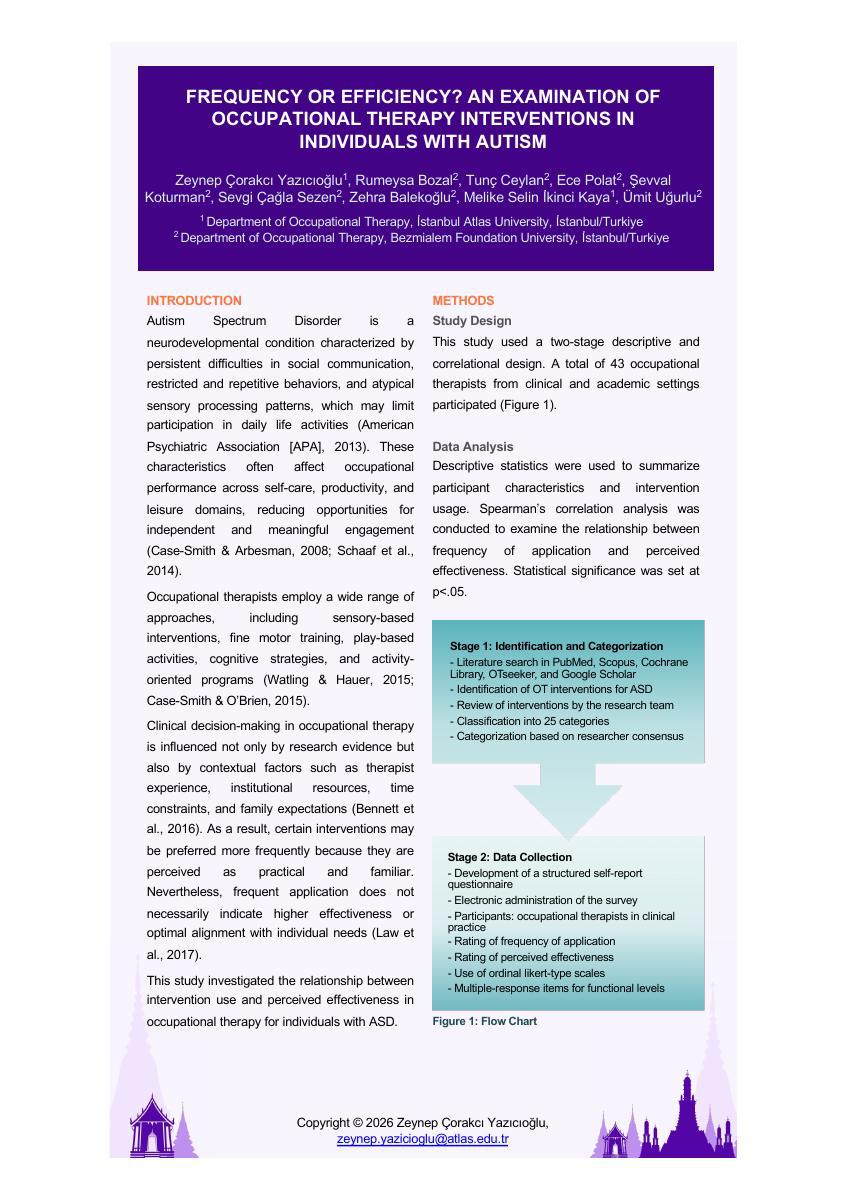
Methods: The study was conducted in two stages. In the first stage, occupational therapy interventions for individuals with autism were identified through literature searches in PubMed, Scopus, Cochrane Library, OTseeker, and Google Scholar databases. These interventions were categorized into 25 categories based on their focus areas (sensory, cognitive, activity-based, etc.). In the second stage, the categories were shared with occupational therapists working in clinical settings, and the relationship between the frequency of application and the effectiveness of each category was determined. The data were analyzed using descriptive statistics and Spearman's correlation analysis.
Results: A total of 44 occupational therapists participated in the study. The participants reported regularly applying at least 8 categories. Moderate correlations were found between the most frequently applied categories: sensory-based (r=.528, p<.001), fine-motor (r=.462, p=.003), and play (r=.478, p =.002). High correlations were found in the least applied categories: technology-based (r=.730, p<.001), vocational (r=.622, p<.001), and dance and movement (r=.750, p<.001).
Conclusion: In addition to the frequency of application, specific conditions and individual needs play a significant role in the effectiveness of an intervention. Therefore, considering the alignment of each intervention with individual goals and its potential impact will likely enhance the benefits achieved.