
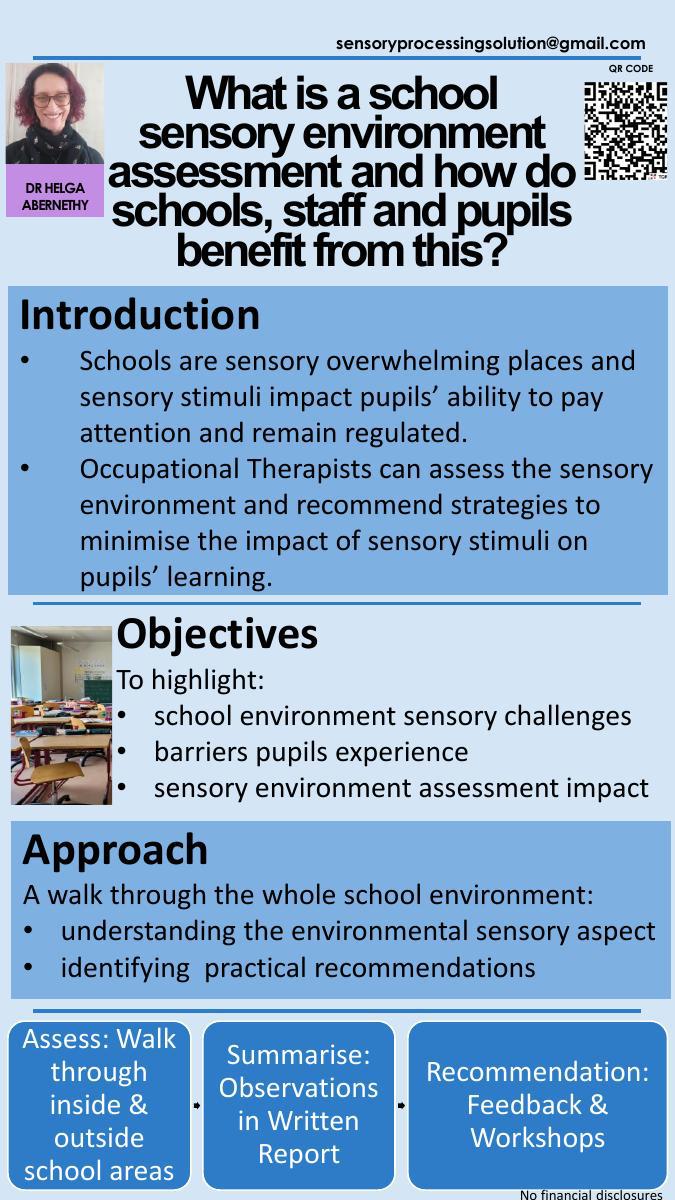
Introduction: Schools are sensory overwhelming places. Many sensory aspects in school environments impacts pupils’ ability to pay attention and remain regulated, which influences their ability to learn.
Occupational Therapists are in the ideal position to complete sensory environment assessments to identify sensory stimuli in the school setting that might impact pupils’ ability to learn. Based on the assessment, recommendations and strategies to minimise the impact of sensory stimuli are identified and provided.
Objectives: Developed from my experience, this presentation highlights the impact of sensory challenges in school environments and the barriers these present for pupils.
Approach: The sensory assessment involves walking through the whole school, including the classrooms and all other spaces. The Therapist makes note of sensory aspects of the environment, covering all the sensory systems, to identify practical recommendations.
Practice Implications:
- Provides schools with evaluative feedback and recommendations.
- Develops staff knowledge and understanding of the impact of sensory stimuli in learning environments.
- Equips schools with a specific understanding of why pupils might become distracted, struggle to concentrate, avoid certain activities or environments, and how sensory stimuli impact pupils’ learning.
- Enables schools to have a practical awareness and make adaptations to the sensory environment to improve all pupils’ learning experience.
Conclusion: The conclusion draws on my practical experience which overwhelmingly suggests that schools find sensory environment assessments beneficial. It results in changes to the school environment and sensory strategies used in classrooms. All schools can benefit from a sensory environment assessment due to the direct impact it has on the pupils’ regulation and learning.