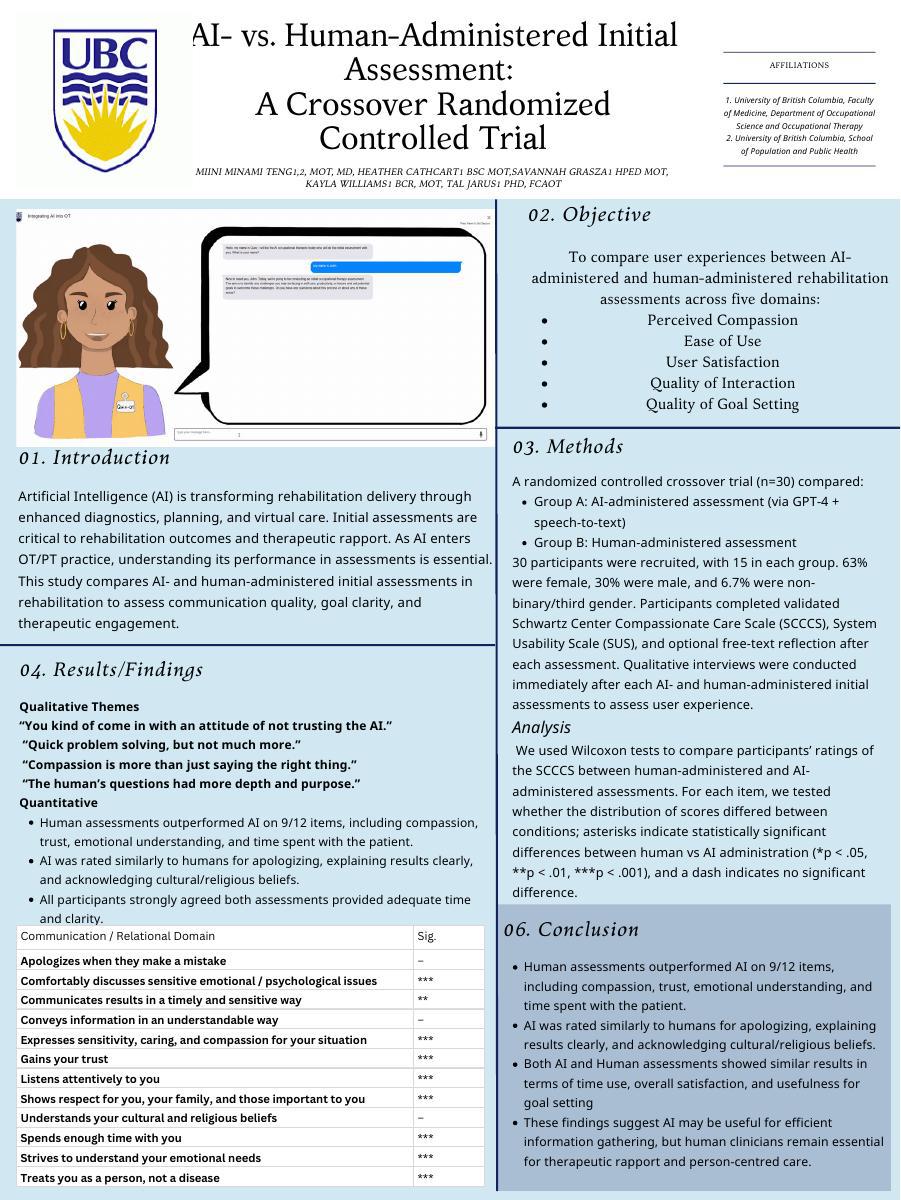
Introduction: The application of artificial intelligence (AI) in healthcare is rapidly evolving, however, research on remote AI assessments in healthcare remains limited (Teng et al., 2023). While virtual assessments are becoming more common, maintaining rapport and client-centeredness presents a challenge. Since building therapeutic relationships and understanding clients' unique needs are fundamental to occupational therapy (OT) practice, it is essential to explore how AI can be integrated without compromising these core values.
Objectives: This study aims to develop a remote, AI-administered OT initial assessment and compare it to a human-administered OT initial assessment.
Methods: This crossover randomized controlled trial included 30 participants, each completing both AI-administered and human-administered OT assessments in randomized order. The AI-administered OT assessment is designed for independent completion, with a researcher available via Zoom if issues arise. Following each session, participants completed surveys on usability, perceived compassion, and goal-setting experience, and participated in a reflective interview to provide additional insights. Data analyzed using descriptive and inferential statistics and thematic analysis.
Findings: preliminary analysis indicates that the AI-administered assessments allow producing comparable therapeutic goals and user satisfaction levels as the human-administered assessments. Conclusion/Significance to the Occupational Therapy Profession: This study explores the integration of AI into OT practice, empathizing the feasibility of AI-administered assessments in healthcare. Previous studies have suggested that participants found AI-generated responses to be more compassionate than those from healthcare professionals (Maida et al, 2024; Ayers et al. 2023). The current tested AI tool shows comparable compassion and goal quality; thus, it has the potential to improve OT service delivery while maintaining collaborative relationship -focused care.
