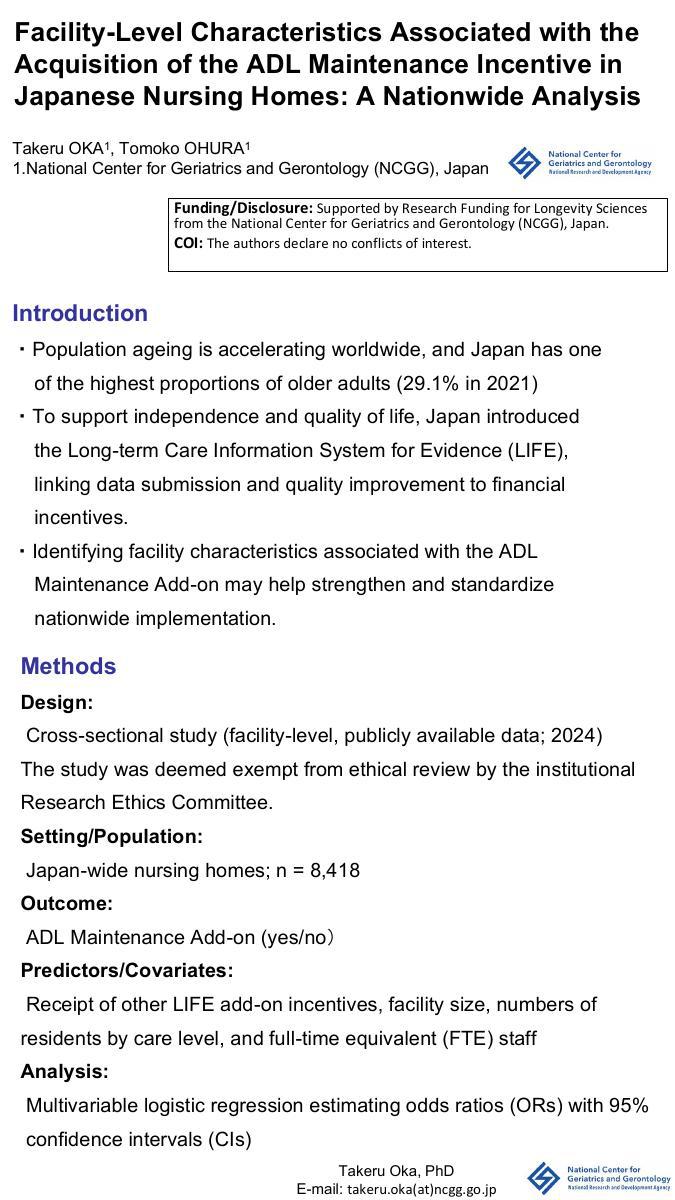
Introduction: The global aging population is increasing, and Japan has one of the highest aging rates. In 2021, approximately 29.1% of Japan’s population was elderly. Long-term care services in Japan are provided through a public long-term care insurance system, which includes various financial incentives that supplement basic services. This study examines facility-level characteristics associated with acquiring incentives for maintaining Activities of Daily Living (ADL) nationwide.
Methods: This study analyzed 8,418 nursing homes across Japan using 2024 publicly available data. A logistic regression analysis was conducted, with the presence or absence of the ADL Maintenance Incentive as the dependent variable. The dependent variable is whether the facility receives the ADL Maintenance Incentive, which is granted when a resident's ADL is maintained or improved during the evaluation period. Independent variables included other financial incentives, facility size, resident numbers by care level, and full-time equivalent staff.
Results: The Self-Support Incentive showed the strongest association with the ADL maintenance incentive (OR = 2.73, 95% CI: 2.18–3.42), followed by the Toileting Support Incentive (OR = 2.23, 95% CI: 1.73–2.86), Pressure Ulcer Management Incentive (OR = 2.13, 95% CI: 1.66–2.74), and Scientific Care Promotion Incentive (OR = 1.74, 95% CI: 1.43–2.11). Facility size, resident numbers by care level, and full-time equivalent staff showed no significant associations.
Conclusion: The Self-Support Incentive was most strongly associated with the ADL maintenance incentive, emphasizing personalized care over standardized approaches. This incentive highlights the importance of individualized care tailored to each person’s background. Occupational therapy interventions are essential in effectively implementing these approaches.
