
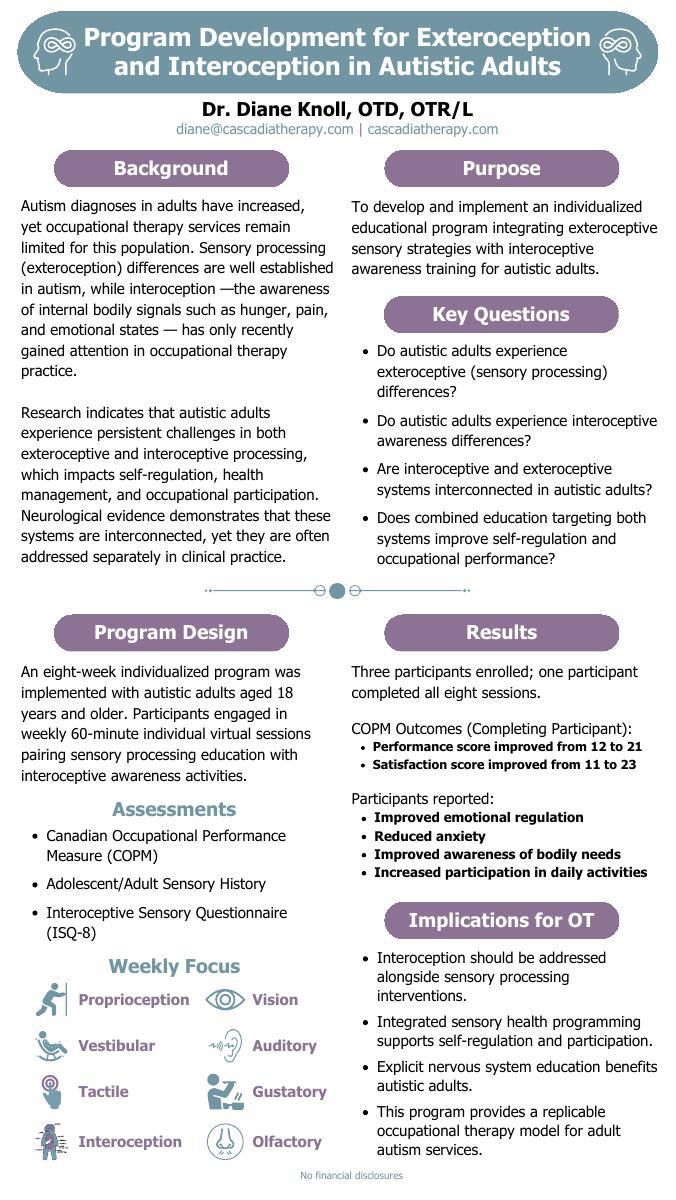
Introduction/Rationale: The increasing prevalence of late autism diagnoses in adults highlights a significant gap in occupational therapy services for this population. Understanding exteroceptive and interoceptive processing can inform integrated interventions to assist autistic adults in navigating daily routines. This review and needs assessment aim to guide the creation of a collaborative sensory health plan for autistic adults, based on current research.
Objectives:
- To explore the sensory processing experiences of autistic adults, focusing on exteroceptive and interoceptive processing.
- To examine the relationship between exteroceptive and interoceptive systems in autistic adults.
- To determine whether a combined approach, integrating interoceptive awareness and sensory processing strategies, enhances the ability of autistic adults to manage daily routines and occupations.
Methods/Approach: A systematic literature search was conducted for articles published between 2012 and 2022. Twenty studies were selected based on inclusion criteria for autistic adults aged 18 and older, addressing exteroception, interoception, and sensory processing. A needs assessment examined target populations, subgroups, primary and secondary sources of information, and stakeholder responses. This informed the development of an 8-week Telehealth program incorporating both exteroceptive and interoceptive principles. Participants completed pre- and post-assessments and interviews.
Results/Practice Implications: Post-assessment results revealed that participants who completed the program showed significant improvements in occupational performance and satisfaction. The integration of exteroceptive and interoceptive strategies enhanced self-regulation and reduced anxiety. Even participants who did not complete the program reported improvements in self-regulation.
Conclusion/Contribution to the Occupational Therapy Profession: This program provides initial evidence that integrating exteroceptive and interoceptive strategies can improve occupational performance and satisfaction in autistic adults, contributing to innovative approaches in occupational therapy practice.