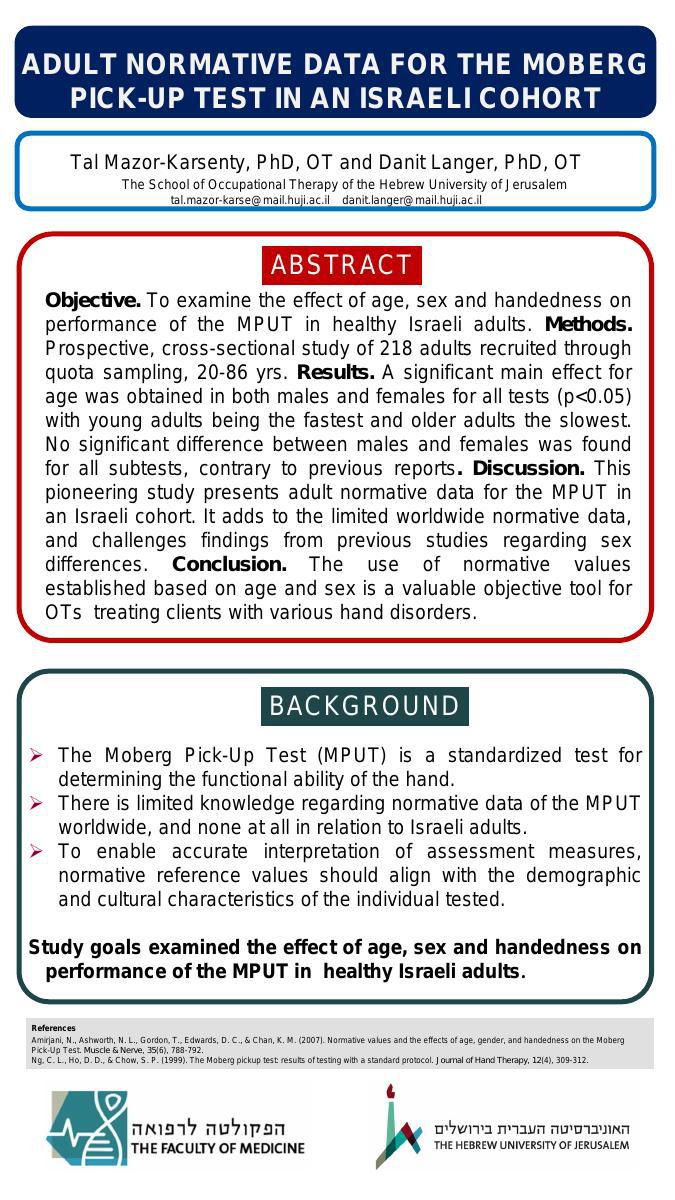
Introduction: The Moberg Pick-Up Test (MPUT) is a standardized test for determining hand function, focusing on dexterity and sensation. Despite its widespread clinical use, there is limited normative data worldwide and none specific to Israeli adults. Establishing culturally relevant reference values is essential for accurate interpretation and clinical decision-making in occupational therapy. Objectives: This study aimed to examine the effects of age, sex, and handedness on MPUT performance in healthy Israeli adults and establish normative data for clinical use. Methods: A prospective, cross-sectional study was conducted with 218 adults (20–86 years, M=49, SD=17) recruited through quota sampling. Participants (56% female, 94% right-handed) completed the MPUT, which consists of two phases: (1) picking up and placing 12 small objects into a box with eyes open and closed, and (2) object recognition by touch. One-way ANOVA was used to compare picking up and recognition speed between age groups. Post hoc Tukey comparisons were conducted. Independent t-tests was used to examine sex differences. Results: Age significantly affected performance (p<0.05), with young adults being the fastest and older adults the slowest. The 70+ age group was significantly slower than all other groups. Contrary to previous studies, no significant sex differences were found. Conclusion: This study contributes normative data for Israeli adults, and adds to the limited worldwide normative data. Intact hand function is crucial for occupational performance in all occupational areas. Reference values enable occupational therapists to utilize the MPUT as an objective tool for evaluating hand function.
