Introduction/Rationale: Eco-anxiety, defined as the chronic fear of environmental doom, is a growing concern, especially among young adults. This distress can affect daily activities, work, and leisure, impacting occupational performance and satisfaction. While recognised in mental health literature, the effect of eco-anxiety on occupational engagement remains underexplored.
Objectives: This pilot study aims to explore the relationship between eco-anxiety and occupational performance and satisfaction in young adults.
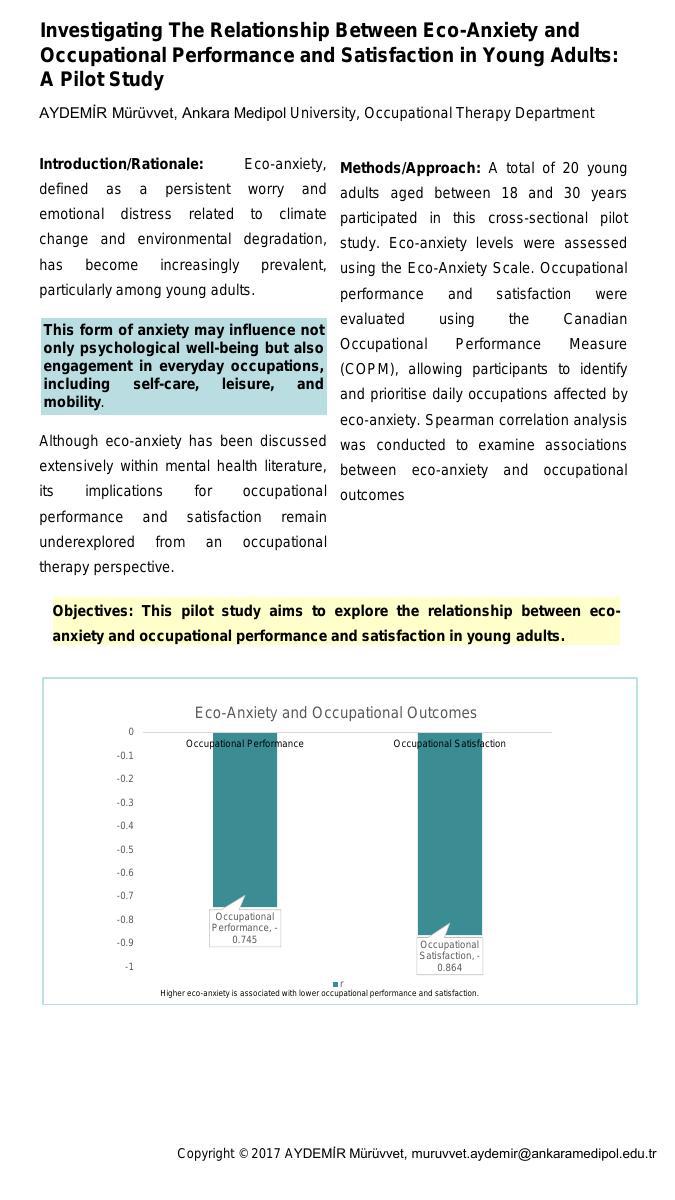
Methods/Approach: Twenty people between the ages of 18 and 30 participated in our study. The Eco-Anxiety Scale was used to measure the eco-anxiety levels of the study participants, and the Canadian Occupational Performance Measurement was used to measure levels of occupational performance and satisfaction. Results/Practice Implications: This pilot study found that the occupations that young adults had the most problems with due to eco-anxiety were having a shower, doing sport and transport. According to the results of the study, there was a strong and negative correlation between eco-anxiety and occupational performance (r=-0.745, p=0.008) and a very strong negative correlation between eco-anxiety and occupational satisfaction (r=-0.864, p=0.000). Conclusion/Significance to the Occupational Therapy profession: As eco-anxiety becomes more prevalent, occupational therapists can play a crucial role in addressing its impact on daily functioning. This study underscores the importance of integrating eco-anxiety management strategies into occupational therapy practice to promote resilience, engagement, and well-being in young adults. Future research should further investigate intervention approaches to enhance occupational adaptation in the face of environmental stressors.
