
Rationale:
Strength-based work in occupational therapy focuses on individuals' strengths and successes, rather than limitations. This approach encourages participation and inclusion.
Objectives:
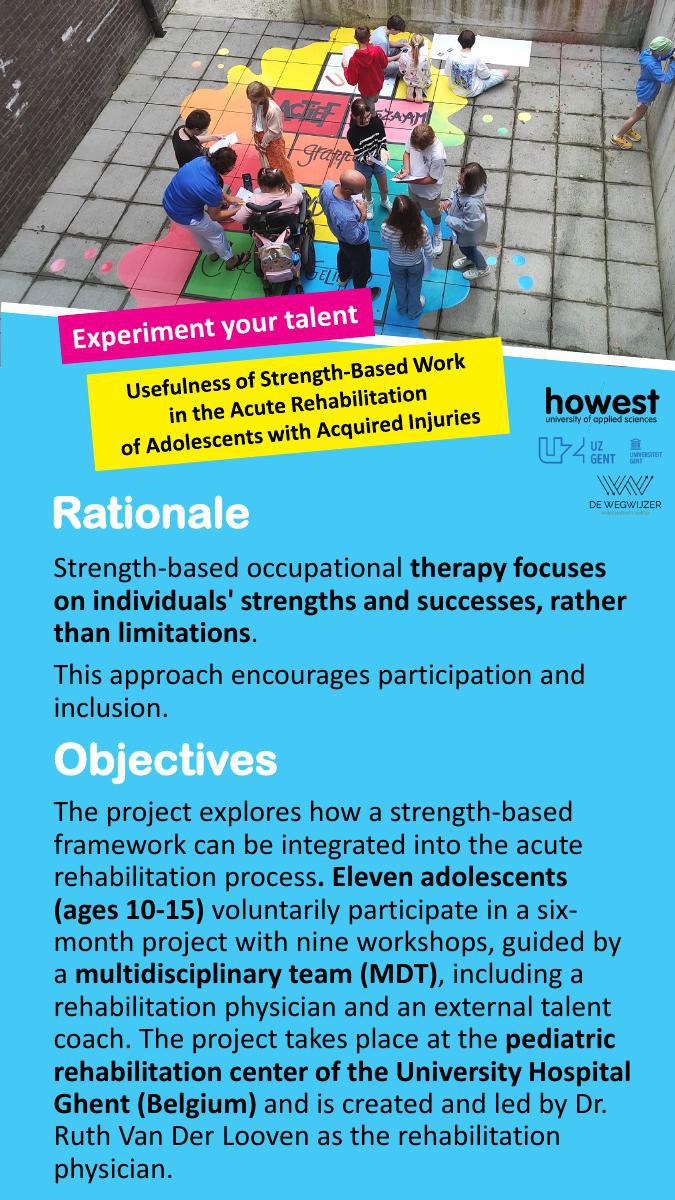
The project explores how a strength-based framework can be integrated into the acute rehabilitation process. Eleven adolescents (ages 10-15) voluntarily participate in a six-month project with nine workshops, guided by a multidisciplinary team (MDT), including a rehabilitation physician and an external talent coach. The project takes place at the pediatric rehabilitation center of the University Hospital Ghent and is led by Prof. Dr. R. Van der Looven as the rehabilitation physician.
Approach:
A key aspect of strength-based work is support from the adolescent’s social environment. An introductory workshop for parents and therapists helps them recognize and appreciate the adolescents' talents. Through three exploratory sessions, adolescents identify their strengths. The MDT co-creates with them to select six meaningful activities for six workshops, ideally led by individuals with a high X-factor. These workshops provide empowering experiences. Although all adolescents engage in the same activities, the fulfillment they gain varies, highlighting their unique talents.
The project concludes with a celebration involving the adolescents’ families, promoting self-confidence and encouraging social participation. Inclusion begins when adolescents can share their successes within meaningful relationships, enhancing their sense of belonging. This final event underscores the importance of family and community support, fostering social engagement and creating lasting, positive experiences.
Practice Implications:
Strength-based work nurtures the unique strengths of adolescents with disabilities, complementing the traditional medical model focused on performance limitations.
Significance to Occupational Therapy:
Strength-based work aligns with occupational therapy by empowering individuals and enhancing their sense of belonging within their context.