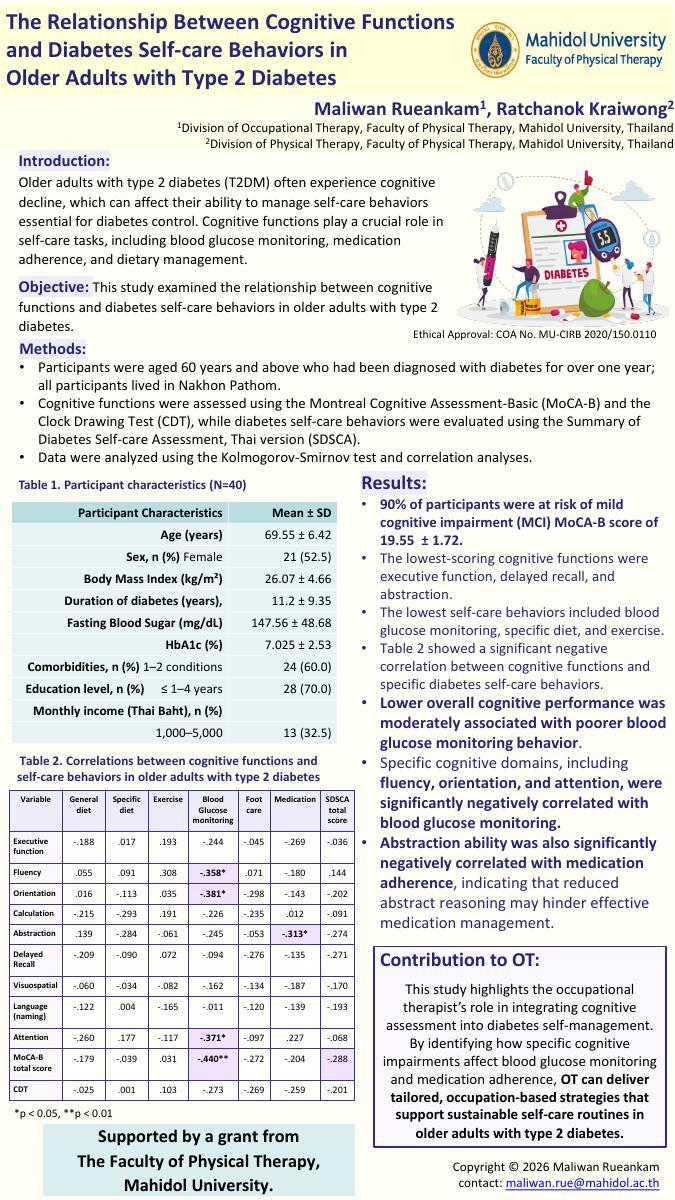
Rationale: Older adults with type 2 diabetes (T2DM) often experience cognitive decline, which can affect their ability to manage self-care behaviors essential for diabetes control. Cognitive functions play a crucial role in self-care tasks, including blood glucose monitoring, medication adherence, and dietary management.
Objective: this study examined the relationship between cognitive functions and diabetes self-care behaviors in older adults with type 2 diabetes.
Methods: Participants (N=40) were aged 60 years and above who had been diagnosed with diabetes for over one year, all participants lived in a suburb area. Cognitive functions were assessed using the Montreal Cognitive Assessment-Basic (MoCA-B) and the Clock Drawing Test, while diabetes self-care behaviors were evaluated using the Summary of Diabetes Self-care Assessment, Thai version (SDSCA). Data were analyzed using the Kolmogorov-Smirnov test and correlation analyses.
Results: indicated that 90% of participants were at risk of mild cognitive impairment (MCI). The lowest-scoring cognitive functions were executive function, delayed recall, and abstraction. The lowest self-care behaviors included blood sugar monitoring, adherence to a specific diet, and exercise. Significant negative correlations were found between fluency, attention, orientation, and total MoCA-B scores with blood glucose monitoring, suggesting that deficits in these areas impair adherence. Additionally, abstraction was negatively correlated with medication adherence, indicating difficulty in understanding medication instructions and recognizing long-term health consequences.
Conclusion: these findings highlight the impact of cognitive function on diabetes self-care and the need for occupational therapy interventions. Occupational therapists can develop structured routines, cognitive strategies, and adaptive tools to support self-care management. Future studies should include a larger sample size and qualitative methods to further explore self-care behaviors in older adults with type 2 diabetes.
