
Introduction
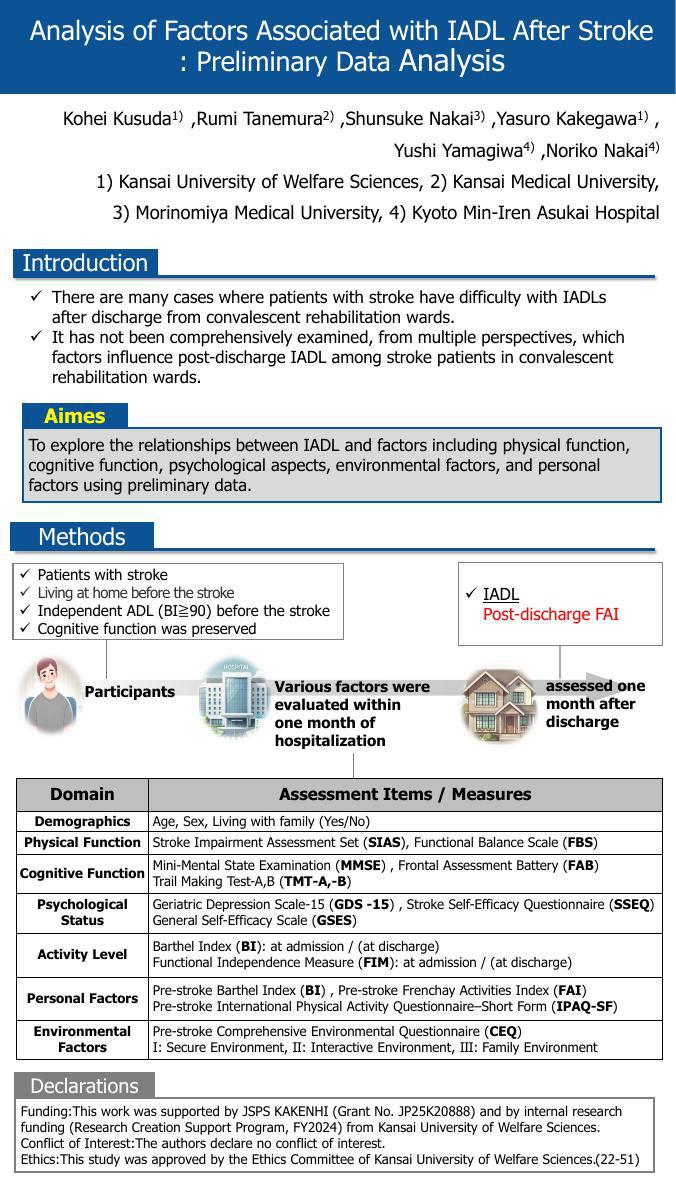
Stroke survivors often experience long-term difficulties in instrumental activities of daily living (IADL). It is crucial to accurately predict post-discharge IADL status during hospitalization for effective interventions. However, it has not been fully examined from multiple perspectives what factors influence post-discharge IADL in stroke patients in convalescent rehabilitation wards. This study aims to explore the relationships between IADL and factors including physical function, cognitive function, psychological aspects, environmental factors, and personal factors using preliminary data.
Methods
Participants were stroke patients admitted to a convalescent rehabilitation ward. Inclusion criteria were (1) living at home before the stroke, (2) independent ADL (BI ≥ 90), and (3) sufficient cognitive and language function (MMSE ≥ 24) for interviews. IADL was assessed one month after discharge using the Frenchay Activities Index (FAI). Various factors were evaluated within one month of hospitalization, and correlations between these factors and post-discharge FAI were analyzed. Ethical approval was obtained, and written informed consent was secured from all participants.
Results
Twenty-eight patients (74.5±8.9 years, 15 males, 13 females) participated. Post-discharge FAI was significantly correlated with pre-stroke FAI (ρ=0.689, p<0.001), pre-stroke activity level (IPAQ-SF) (ρ=0.500, p<0.01), FIM-Cognitive (ρ=0.378, p<0.05), Comprehensive Environmental Questionnaire-SF(CEQ-SF) (ρ=0.561, p<0.01), and social interaction (CEQ-SF subscale, ρ=0.554, p<0.01).
Conclusion
Pre-stroke activity level and social interactions play key roles in post-discharge IADL. However, physical, cognitive, and psychological factors during hospitalization showed no significant correlation. It suggests difficulty in predicting IADL based on early hospitalization data. Further research with complete datasets is needed.