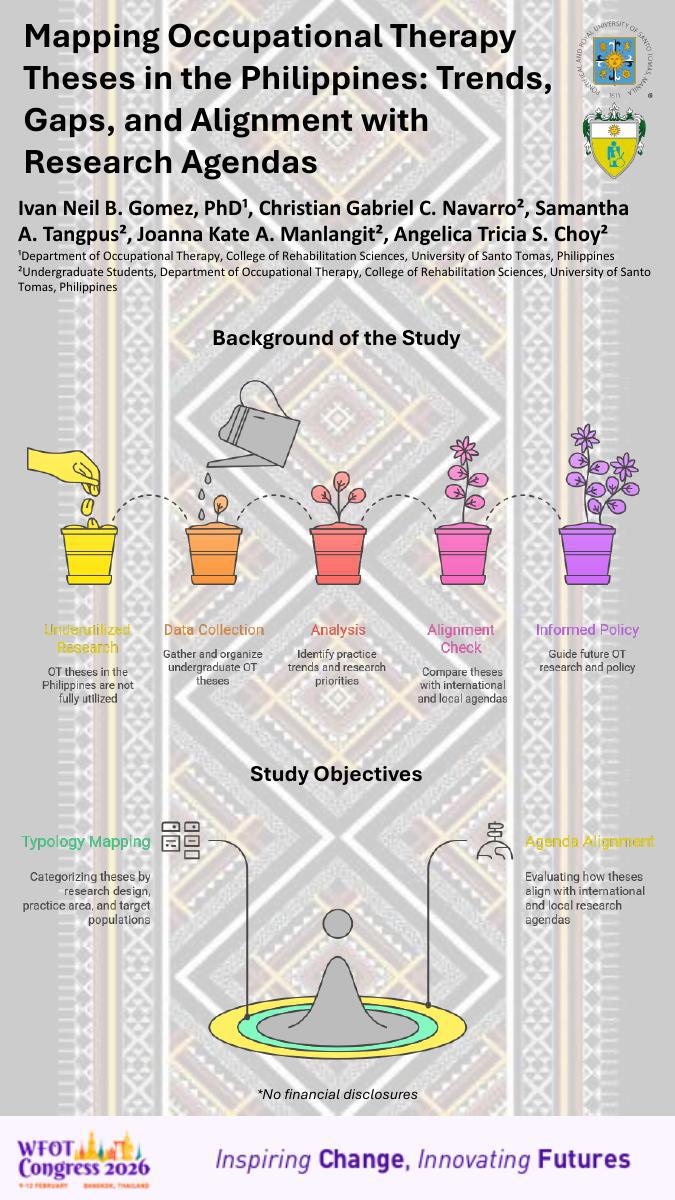
Introduction: Occupational therapy (OT) research is vital for advancing evidence-based practice and addressing global and local health priorities. In the Philippines, undergraduate OT theses form a significant yet underutilized research body. These studies, often mandated by higher education institutions, offer insights into practice trends and research priorities. However, their alignment with international and local research agendas remains unclear. Mapping these theses can identify research gaps, inform policy, and guide future directions.
Objectives: This study aimed to: (1) map the typology of undergraduate OT theses in terms of research design, practice area, and target populations, and (2) assess their alignment with key international and local research agendas.
Methods: A scoping review following JBI guidelines and the PRISMA-ScR framework analyzed undergraduate OT theses (2000–2022) from institutional archives, repositories, and university correspondences. Titles were categorized by research methodology, practice area, and population focus. Alignment with research agendas was examined through frequency distributions and thematic analysis.
Results: A total of 507 OT theses were reviewed. Most used quantitative (57.6%) or qualitative (29.8%) designs. The primary focus areas were pediatrics (23.5%), physical dysfunction (12.6%), and psychosocial OT (10.7%). Research aligned with "Good Health and Well-Being" (48.7% of SDGs), "Evidence-Based Practice" (34.1% of WFOT priorities), and "Promoting Lifelong Learning" (40.0% of the Philippine Development Plan). Research on aging, disaster risk, and emerging fields like telehealth remained limited.
Conclusion: Undergraduate OT theses contribute to the profession’s knowledge base. Gaps in areas such as aging, chronic conditions, and innovative OT interventions suggest future research opportunities. Strengthening research capacity and ensuring alignment with global and national priorities can drive meaningful change and innovation in Philippine OT practice.