
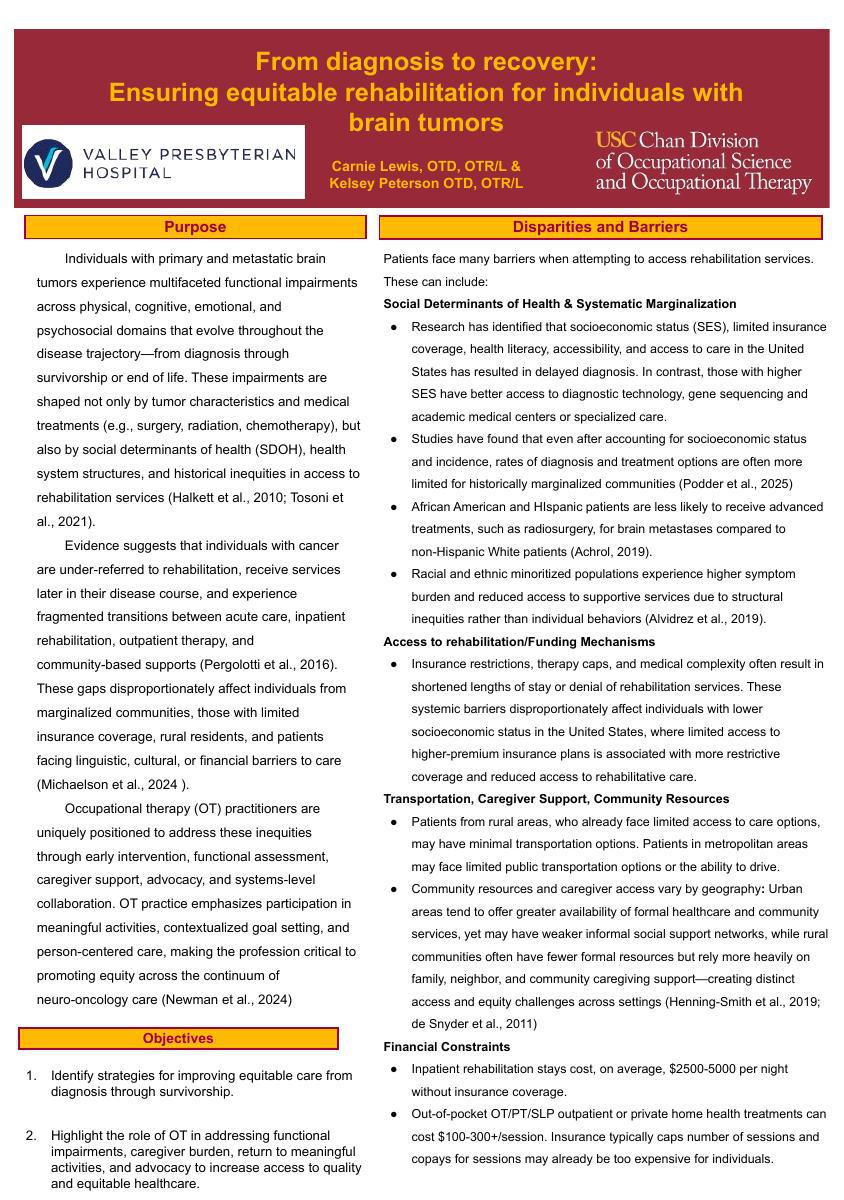
Introduction / Rationale: Individuals with brain tumors face complex rehabilitation needs influenced by tumor type, treatment trajectory, comorbidities, and social determinants of health. Equitable rehabilitation access is often limited by systemic barriers and historical marginalization. Occupational therapists play a vital role in bridging these gaps by promoting care access, connecting patients with resources, and advocating across the continuum of care.
Objectives: Identify strategies for improving equitable care from diagnosis through survivorship.
Highlight the role of OT in addressing functional impairments, caregiver burden, return to meaningful activities, and advocacy to increase access to quality and equitable healthcare.
Methods / Approach: This poster will explore best practices in equitable brain tumor rehabilitation. Considerations will include disparities in access to prehabilitation, inpatient and outpatient therapy, community resources, funding mechanisms, and caregiver support. The impact of interdisciplinary collaboration and advocacy efforts will also be examined.
Results / Practice Implications: Findings will highlight barriers to rehabilitation access, including transportation, financial constraints, and systemic marginalization. Recommendations will focus on improving referrals, enhancing transitional care planning, promoting palliative care considerations, and addressing cultural and spiritual influences on end-of-life decision-making. Strategies for occupational therapists to advocate for equitable care, including interdisciplinary communication and disease self-management, will also be discussed.
Conclusion / Contribution to the occupational therapy profession: Occupational therapists play a pivotal role in ensuring individuals with brain tumors receive holistic, equitable rehabilitation services. By addressing functional impairments, facilitating access to community and financial resources, and advocating for systemic changes, OT practitioners can improve patient outcomes, promote participation in meaningful activities, and support individuals throughout their care.