
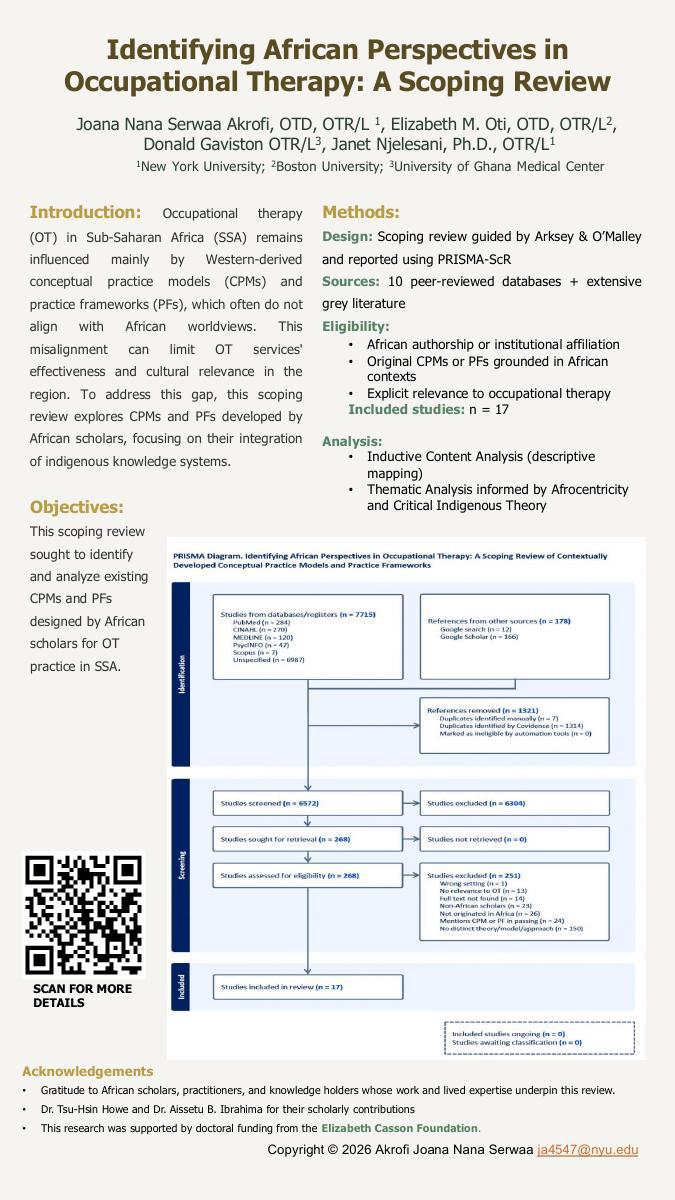
Introduction: Occupational therapy (OT) in Sub-Saharan Africa (SSA) remains influenced mainly by Western-derived conceptual practice models (CPMs) and practice frameworks (PFs), which often do not align with African worldviews. This misalignment can limit OT services' effectiveness and cultural relevance in the region. To address this gap, this scoping review explores CPMs and PFs developed by African scholars, focusing on their integration of indigenous knowledge systems.
Objectives: This scoping review seeks to identify and analyze existing CPMs and PFs designed by African scholars for OT practice in SSA. It will examine how these frameworks integrate African philosophies, such as Ubuntu, and Sankofa, to reflect the cultural realities of African communities. Additionally, the review will explore how these models can inform future efforts to develop Afrocentric OT frameworks that enhance service delivery, education, and policy. By identifying existing literature and practice gaps, the review highlights opportunities for advancing OT in SSA through contextually relevant and sustainable approaches.
Methods: Following Arksey and O’Malley’s (2005) scoping review framework and PRISMA-ScR guidelines, a search will be conducted across academic databases and grey literature. The review will apply thematic and content analyses to synthesize key concepts.
Practice Implications: This review will provide insights into developing Afrocentric OT models and frameworks that are culturally relevant, inclusive, and responsive to the needs of African communities. By integrating indigenous healing traditions and communal perspectives on health and well-being, occupational therapists can enhance service delivery, increase accessibility, and promote sustainable rehabilitation practices.
Conclusion: Findings from this review will guide the development of Afrocentric OT models and frameworks, ensuring that African worldviews inform OT education, practice, and policy in SSA.