
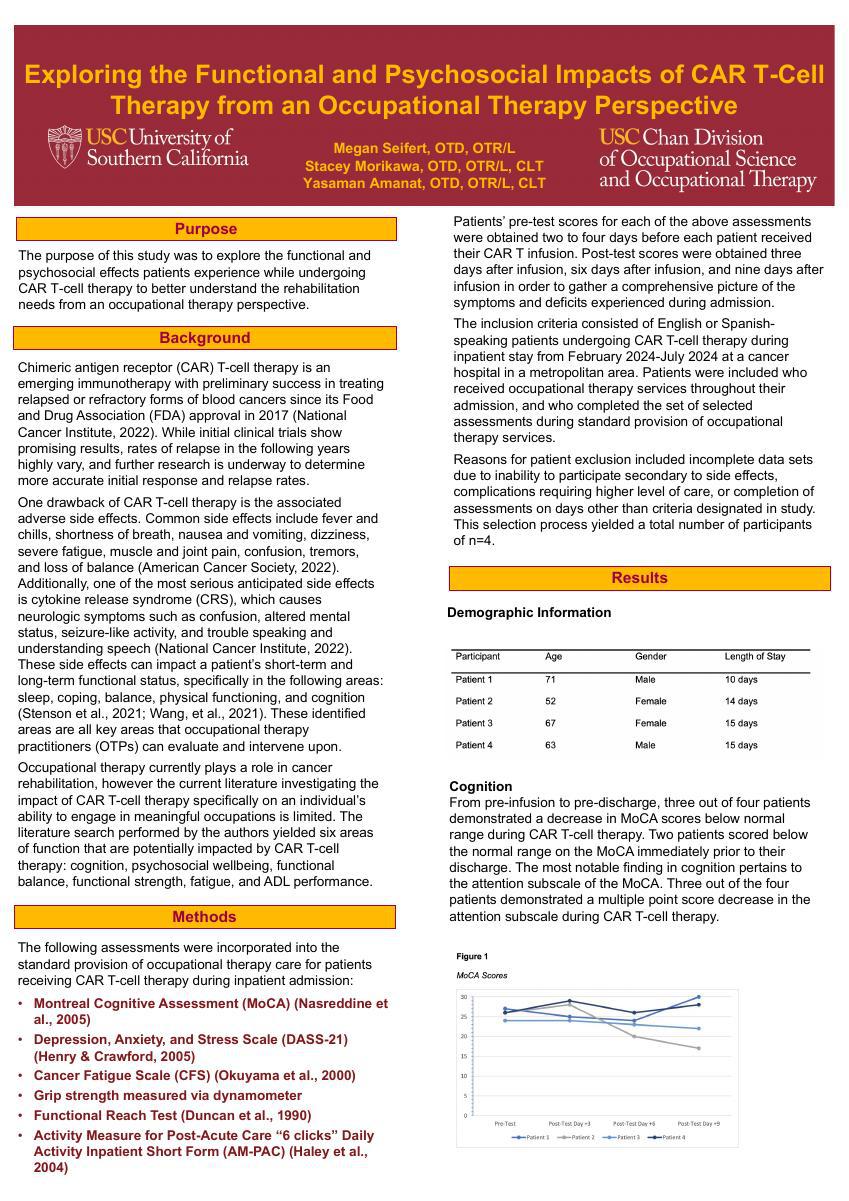
Introduction: Chimeric antigen receptor (CAR) T-cell therapy is an immunotherapy with preliminary success in treating blood cancers, however this immunotherapy is associated with adverse side effects that can impact patients’ functional statuses. There is a need to further explore side effects associated with CAR T-cell therapy and the role occupational therapy may serve in addressing affected areas.
Objectives: The purpose of this study was to explore the functional and psychosocial effects patients experience while undergoing CAR T-cell therapy in order to better understand rehabilitation needs from an occupational therapy perspective.
Methods: A retrospective chart review was completed to collect data from patients who underwent CAR T-cell therapy at a cancer hospital between February 2024 and July 2024. Patients were included if they received occupational therapy services throughout their inpatient stay, including completion of selected assessments prior to infusion, day +3 following infusion, day +6 following infusion, and day +9 following infusion. Trends between assessment scores prior to infusion and prior to discharge were explored with each patient.
Results: Although with varied results, this study found that CAR T-cell therapy may affect patients’ cognition, psychosocial wellbeing, grip strength, balance, and fatigue levels.
Discussion: Occupational therapy practitioners in acute care oncology can focus on the areas identified in this study to support evaluation and intervention planning for patients undergoing inpatient CAR T-cell therapy.