
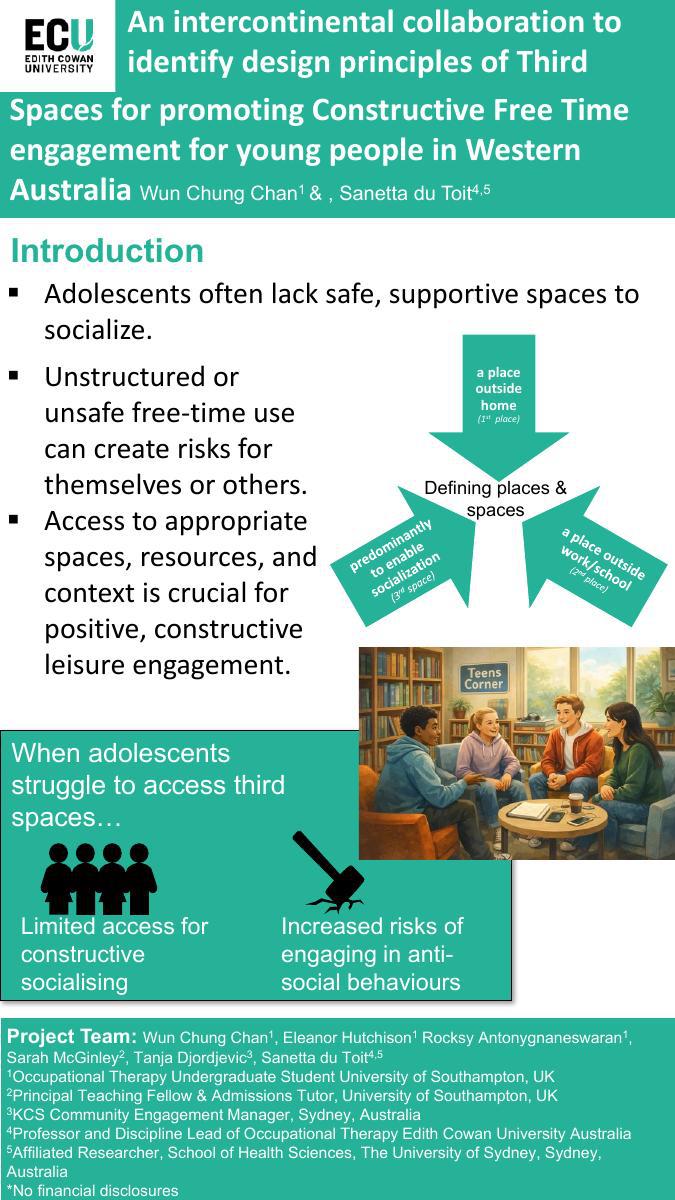
Introduction: Adolescents often find it challenging to access safe and conducive spaces and places to socialise and physically ‘hang out’. When free time use is not conducive for well-being, it could potentially result in a risk to the young person themself or society (e.g., drug taking, vandalism).” Therefore, space, place and context, including access to resources, are important factors ensuring that the use of free time has positive outcomes and promotes constructive leisure engagement.
Objectives: To explore the concept of third spaces and develop design principles to promote constructive free time community engagement opportunities for young people in Western Australia (specifically Perth).
Approach: Second year occupational therapy students from the University of Southampton (UK) worked in collaboration with academic staff from Edith Cowan University (Perth) and industry partners in Australia to develop a sound understanding of: third space theory and how this relates to promoting meaningful engagement for adolescents the risks associated with a lack of space and place for constructive recreation for adolescents
Practice Implications: Occupational therapy perspectives on pleasure, productivity and restoration associated with context/environment, in combination with third space theory, promote designing and advocating for environments that mitigate risks associated with unstructured free time. Ensuring accessible third spaces for adolescents will promote positive developmental outcomes and well-being among young people.
Contribution to occupational therapy: This project provided a set of design principles that could support occupational therapists in developing third spaces conducive to constructive socialisation and leisure engagement. These principles offer practical guidelines for creating environments that enhance adolescents' access to safe and supportive spaces, ultimately contributing to their overall well-being and community integration.