
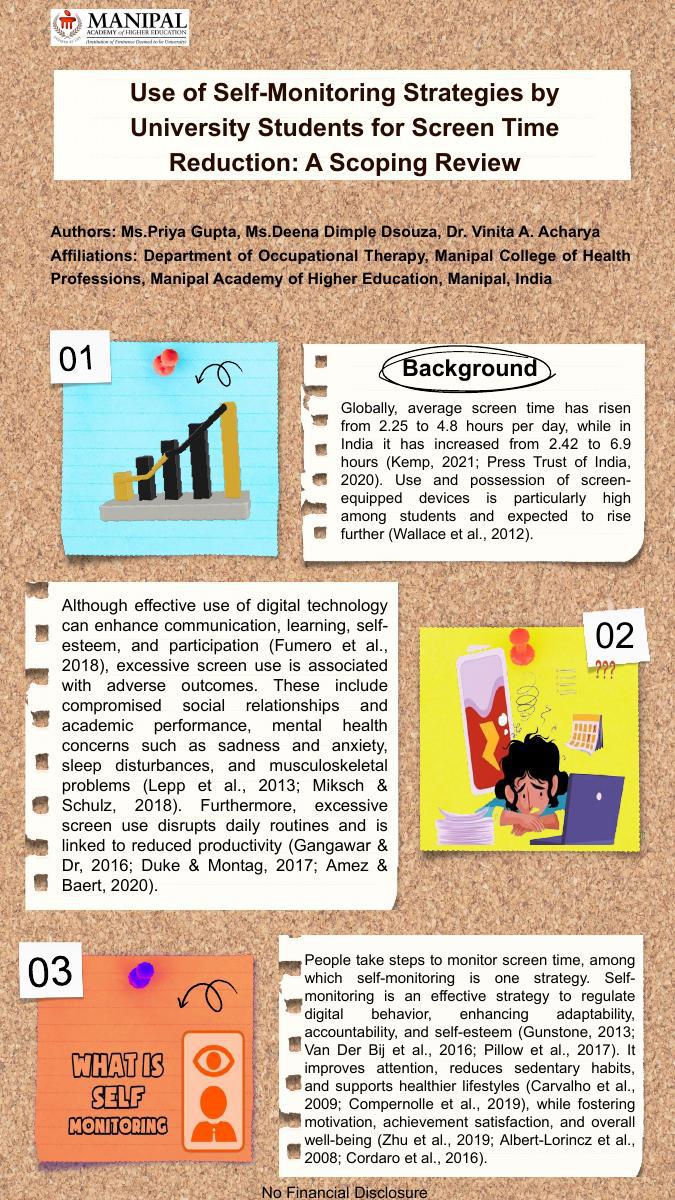
Introduction: Globally, there has been an increase in screen time, especially among students, due to academic demands and an increase in social media. There have been negative impacts, including sleep problems, anxiety, sadness, musculoskeletal issues, and daily life activities. Self-monitoring strategies are one of the most effective strategies for observing, evaluating, and recording one's feelings, thoughts, and behaviors toward time spent on screen. Using self-monitoring strategies by university students leads to an increased attention span, enhanced performance, increased self-esteem, and higher satisfaction, ultimately leading to an improved perception of quality of life.
Objective: To identify university students' self-monitoring strategies to reduce screen time.
Methodology: The scoping review was conducted, and the PRISMA guidelines were followed. The studies were collated from interdisciplinary research from Scopus, PubMed, and Embase databases. Studies included were from 2014 to 2024.
Results: Six articles met the eligibility criteria. The studies are grouped into three themes: a) changes to smartphone settings and placement of phones, b) goal setting and action planning, and c) non-smartphone activities.
Conclusion: The results show that university students have used self-monitoring strategies to reduce their screen time, such as not recharging phones, applications restrictions, usage restrictions, turning off notifications, removing media icons from the home screen, setting goals for themselves, engaging in physical exercises, music and art activities and other sports.