
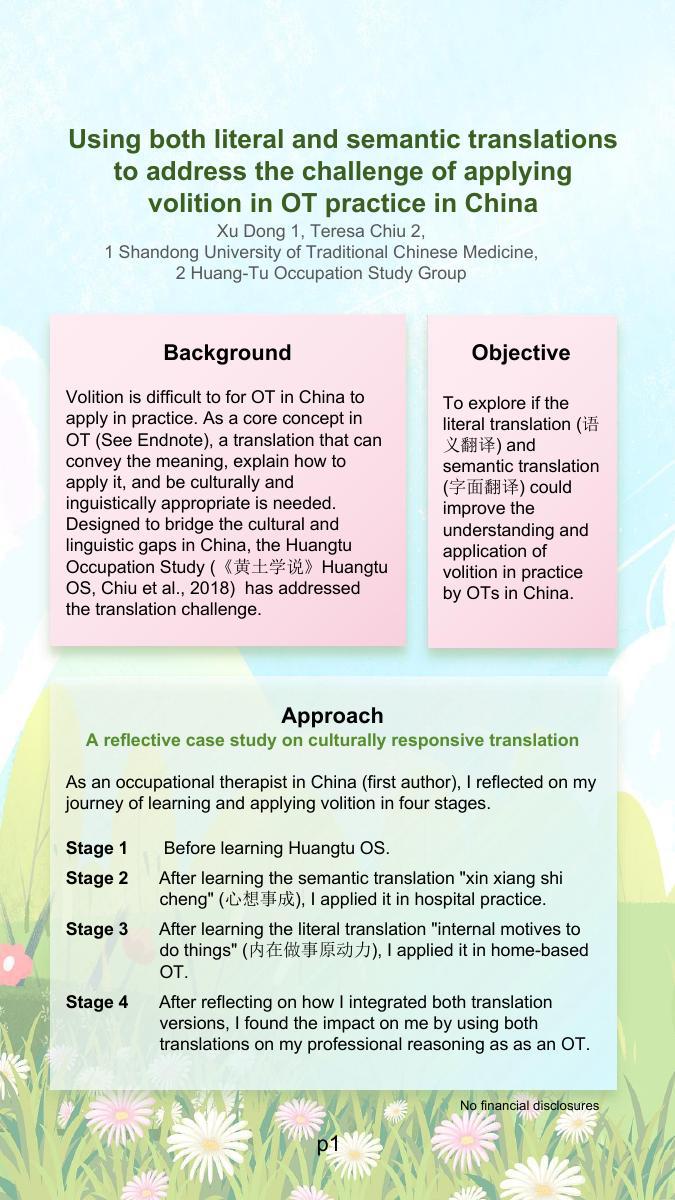
Introduction: Volition is difficult to apply in OT practice in China. A translation is needed to convey OT meaning, explain how to apply it, and be culturally and linguistically appropriate. The Huangtu Occupation Study addressed these translation challenges using two translation methods: literal and semantic translations.
Objectives: To explore if the literal and semantic translations could improve the understanding and application of volition in China.
Approach: An OT in China reflected on how she learned and applied volition in four stages. 1) Before learning Huangtu OS. 2) After learning the semantic translation "xin xiang shi cheng" and applied it in hospital practice. 3) After learning the literal translation "internal motives to do things" and applied it in home-based OT. 4) The impact of integrating both versions on professional reasoning.
Results: 1) Didn’t understand how to apply volition in component-driven activities in hospital practice. 2) Learned to apply the semantic translation "xin xiang shi cheng" to understand the occupational needs of the clients, develop rapport, and engage them in meaningful occupations. The focus on volition has shifted the outcomes to enabling occupation. 3) Learned the literal translation of volition to improve the client’s ability, confidence, and energy to engage in the occupational roles. Focusing on volition has helped to manage the complexity in home-based practice. 4) The integration of both versions has enhanced the professional reasoning and enabled the OT to stay focused on occupational outcomes.
Conclusion: Although learning volition in China is difficult, the use of two translated versions has addressed the challenge and helped OTs to focus on occupation. Hope that more OTs would be inspired to use volition in practice and appreciate the dynamic nature and complexity of OT professional reasoning.