
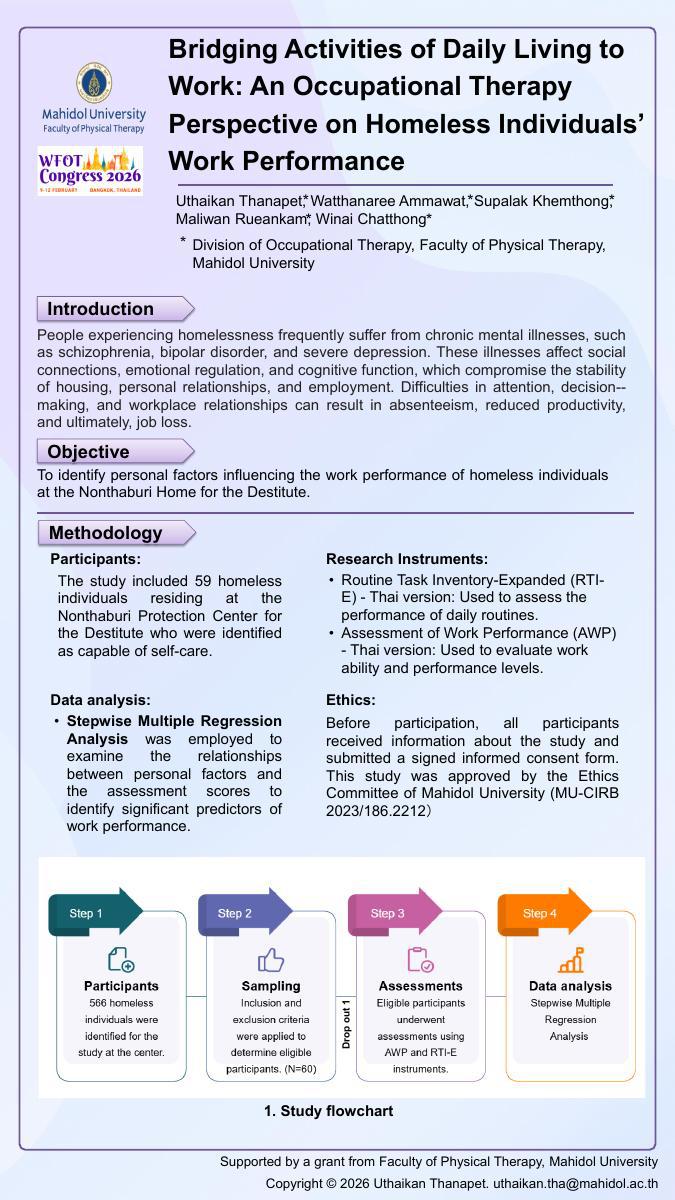
Rationale: People experiencing homelessness frequently suffer from chronic mental illnesses such as schizophrenia, bipolar disorder, and severe depression. These illnesses affect social connections, emotional regulation, and cognitive function, making it difficult to maintain stable housing, relationships, and employment, potentially leading to homelessness. Difficulties in attention, decision-making, and workplace relationships can result in absenteeism, reduced productivity, and job loss.
Objectives: This study aims to identify personal factors influencing the work performance of homeless individuals at the Nonthaburi Home for the Destitute.
Methods: Data were collected from 59 homeless individuals. Personal factors, including age, gender, and educational level, along with scores from the Routine Task Inventory-Expanded (RTI-E), were used as predictors of the Assessment of Work Performance (AWP) scores. A stepwise multiple regression analysis was conducted to examine the relationships between these variables.
Results: The key personal factors influencing work performance among homeless individuals were age, gender, and basic activities of daily living. These factors collectively predicted 29.5% of the variance in work performance.
Significance to the occupational therapy profession: Providing work support for individuals experiencing homelessness is crucial, and early intervention enhances opportunities for self-development. Rehabilitation should begin with basic activities of daily living, as these foundational skills facilitate engagement in meaningful occupations and improve work performance.