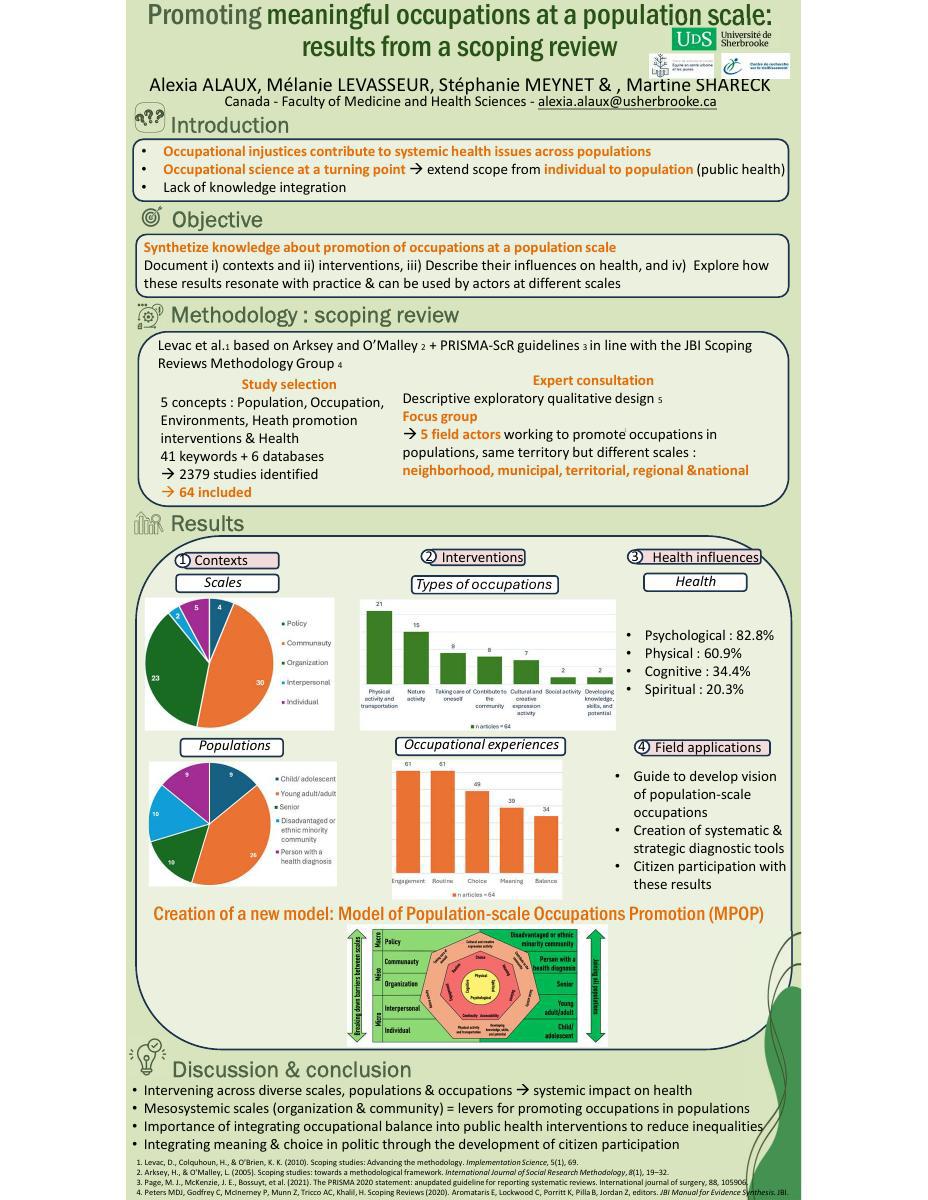
Introduction. To address systemic health issues, it is essential to promote meaningful occupations at a population scale. However, the lack of knowledge integration on this topic is not conducive to its effective use in public health.
Objective. This study aimed to integrate knowledge on the promotion of meaningful occupations at a population scale, by identifying their contexts of application, the interventions implemented and their influences on population health.
Methods. A scoping review was conducted according to the methodology of Levac (2010) and Arksey and O’Malley (2003). Six databases were searched with 62 keywords. A focus group of five practitioners was carried out to discuss the relevance of findings for practice.
Results. 63 studies have been implemented in various contexts, mostly with adults (40% of studies) and at different scales: 11% on microsystemic; 83% on mesosystemic and 6% on macrosystemic scales. Studies concerned interventions targeted several types of occupations including mostly physical activity (32%), nature-related occupations (23%) and other occupations such as community involvement (14%) and considered a range of experiences such as occupational balance, meaning, engagement, choice and daily routine. In general, interventions were found to have positive influence on population physical, psychological, cognitive and social health.
Conclusion. These findings contribute to knowledge integration in occupational science and public health. They can support occupational therapists in implementing more specific interventions and intervening more effectively to promote population health. Ultimately, these results will contribute to promoting collective changes and fostering a healthier society.
