
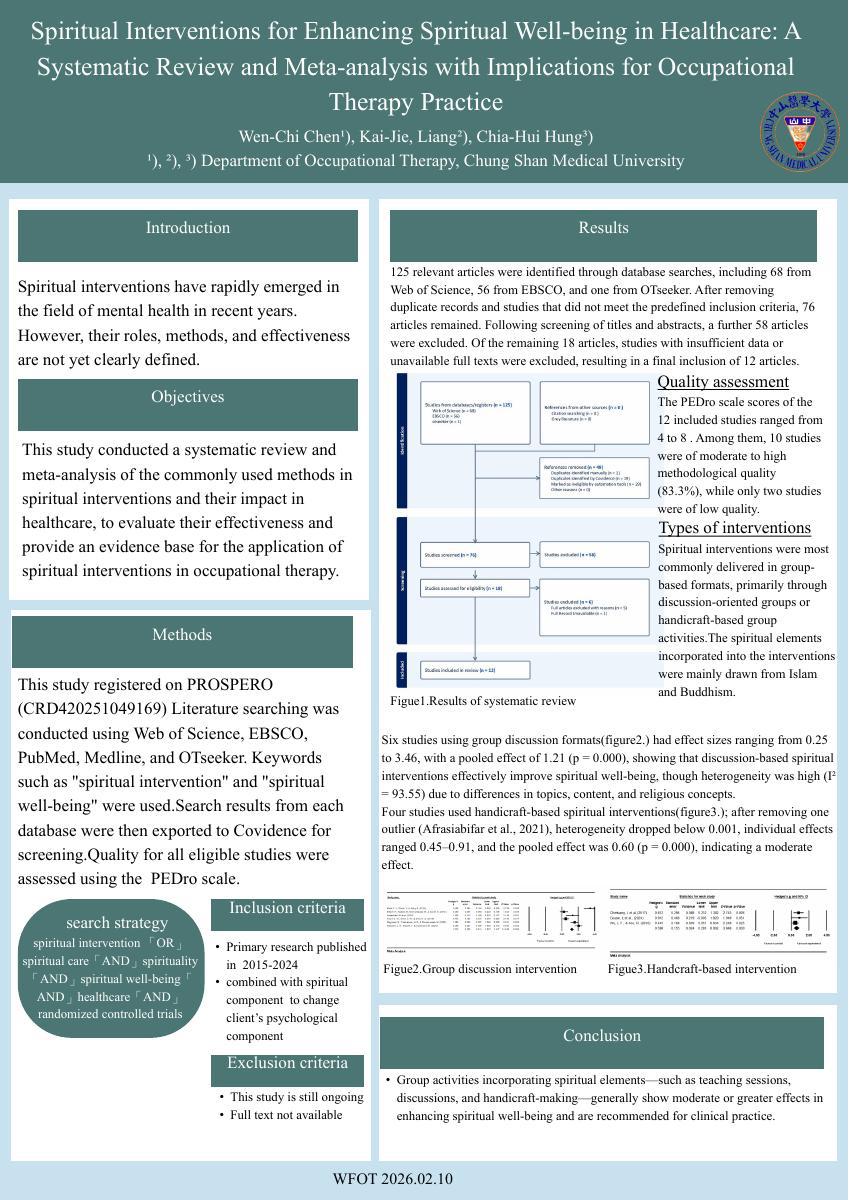
Introduction/Rationale: Spiritual interventions have rapidly emerged in the field of mental health in recent years. However, their roles, methods, and effectiveness are not yet clearly defined.
Objectives: This study conducted a systematic review and meta-analysis of the commonly used methods in spiritual interventions and their impact on wellbeing to evaluate their effectiveness and provide an evidence base for the application of spiritual interventions in occupational therapy.
Method or Approach: Employing the PRISMA framework, this study systematically reviewed literature from databases such as OTseeker, WOS, and EBSCO, using "spiritual interventions" as the keyword. From over 4000 articles published between 2015 and 2024, 27 were initially selected based on criteria such as randomized control trials. Subsequent selection through the Covidence online review tool narrowed it down to 19 articles for systematic review, with 6 undergoing meta-analysis using Comprehensive Meta-Analysis Software (CMA).
Results or Practice Implications: Spiritual interventions, incorporating arts-based therapies, reading, and interactive activities, are diverse and multifaceted. They effectively reduce symptoms of depression and anxiety while enhancing overall wellbeing. The meta-analysis confirmed these benefits, indicating a significant improvement in participants' wellbeing (mean difference = 1.945, 95% CI = [0.839, 3.052], p = 0.001). However, the data exhibited slight asymmetry, reflecting potential heterogeneity due to the variety of intervention types, participant demographics, or different intervention durations.
Conclusion: Evidence supports the efficacy of spiritual interventions in mental health. The variety in methodologies calls for targeted research to identify effective strategies and conditions. Such insights could lead to standardized guidelines, enhancing the integration of these interventions into occupational therapy tailored to specific mental health needs.