
Introduction / Rationale:
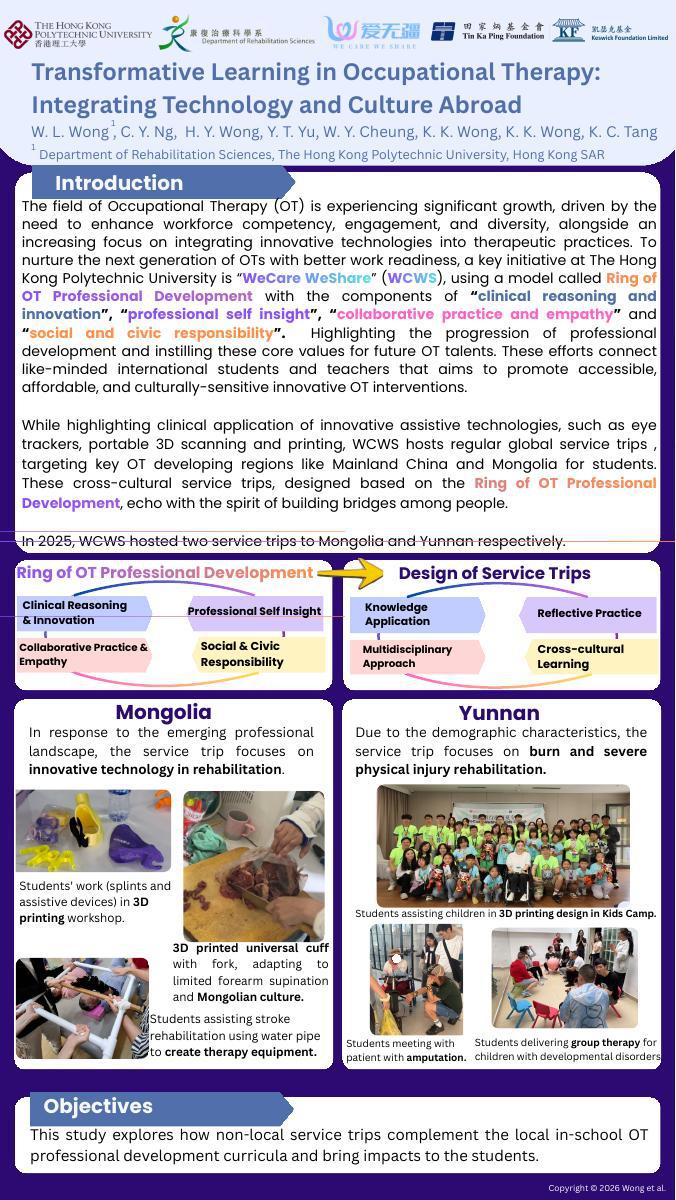
The field of Occupational Therapy (OT) is experiencing significant growth, driven by the need to enhance workforce competency, engagement, and diversity, alongside an increasing focus on integrating innovative technologies into therapeutic practices. In response, the Hong Kong Polytechnic University (PolyU) emphasizes the importance of providing OT students with hands-on international exposures that echo with local in-school professional education curriculum. A key initiative at PolyU is the "We Care We Share" (WCWS) program, connecting like-minded international students and teachers that aims to promote accessible, affordable and culturally-sensitive innovative OT interventions. While highlighting clinical application of innovative assistive technologies, such as eye trackers, portable 3D scanning and printing, WCWS hosts regular global service trips targeting key OT developing regions like Mainland China and Mongolia for students.
Objectives:
This study explores how overseas service trips compliment the local in-school OT professional development curricula and bring impacts to participants.
Methods / Approach:
The Service-Learning Outcomes Measurement Scale was used to collect pre- and post- WCWS service trip data, while semi-structured interviews gathered student feedback on learning expectations and outcomes.
Results / Practice Implications:
Findings indicate that OT students show significant improvements in skill development, self-efficacy, and cultural understanding. Key themes from interviews include variations in personalized therapy across cultures, the role of innovative technology in OT services, filling existing gaps in the curriculum.
Conclusion / Contribution to the occupational therapy profession:
"We Care We Share" program significantly enhances the development of culturally competent, adaptable, and clinically skilled OT students. These efforts overcome demographic barriers, expand career ambitions, and promote transnational practice, improving the accessibility and effectiveness of OT services.