
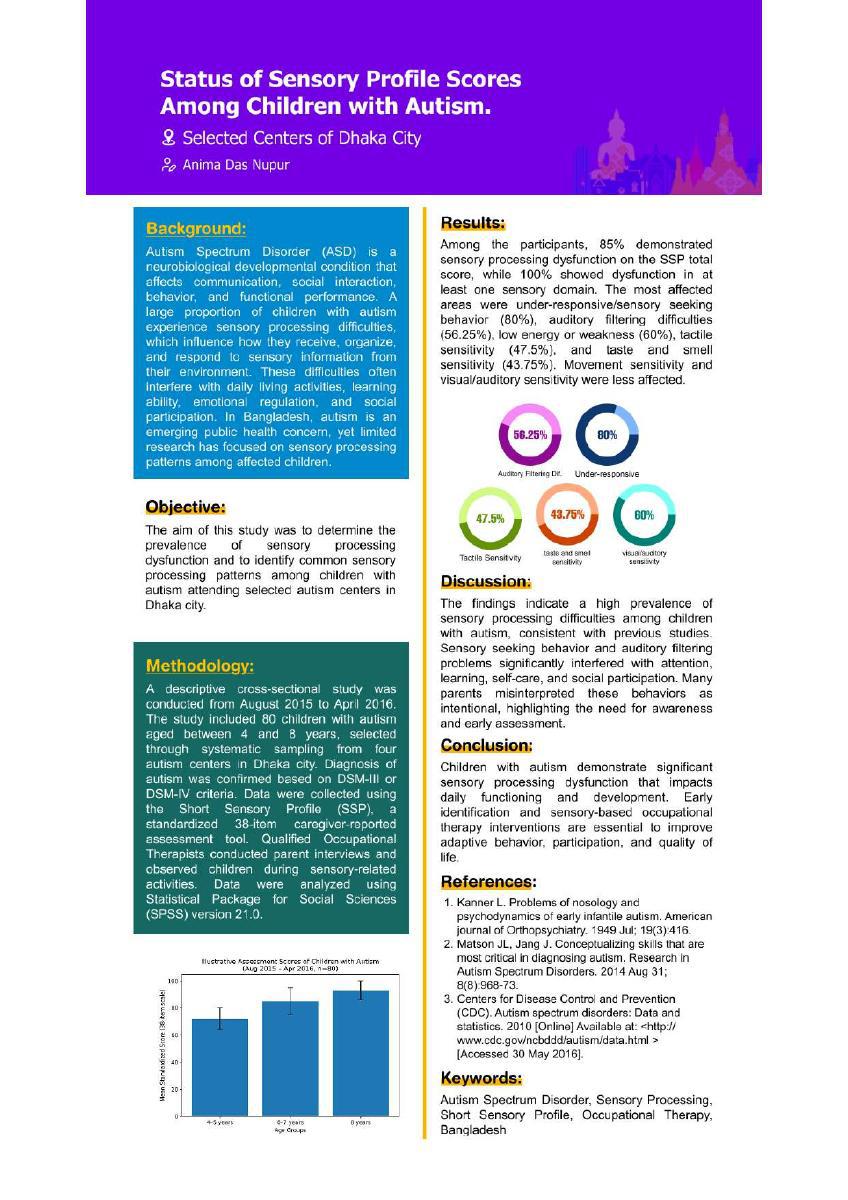
Introduction / Rationale: Autism Spectrum Disorder (ASD) is a neurodevelopmental disorder affecting physical, social, and language skills. Children with autism often have difficulty processing and responding to sensory stimuli. Sensory difficulties affect 45% to 96% of children with ASD, impacting their development, learning, and independence. Addressing sensory issues is particularly important in Bangladesh, where autism service provision is growing.
Objectives: To investigate the prevalence of sensory dysfunction among children with autism. To identify the common patterns of sensory dysfunction in these children.
Methods / Approach: A cross-sectional study design was used with 80 children with autism and their parents. Participants were selected using systematic sampling from four autism centers in Dhaka. Data were collected using the Short Sensory Profile (SSP) tool, involving interviews and direct observations by trained Occupational Therapists. Statistical analysis was done using SPSS version 21.0.
Results / Practice Implications: 78.25% of children with autism showed significant sensory processing dysfunction. Common sensory issues included under-response, sensory seeking, auditory filtering, and tactile sensitivity. 95% of children showed sensory differences affecting their daily living activities (ADLs) and social interactions. Sensory difficulties had a substantial impact on their behavior and functioning.
Conclusion / Contribution to the Occupational Therapy Profession: Nearly 95% of children with autism need intervention for sensory processing dysfunction. Early identification of sensory issues is crucial for effective intervention. This study provides valuable insights into sensory dysfunction, guiding diagnosis and treatment strategies in occupational therapy.