
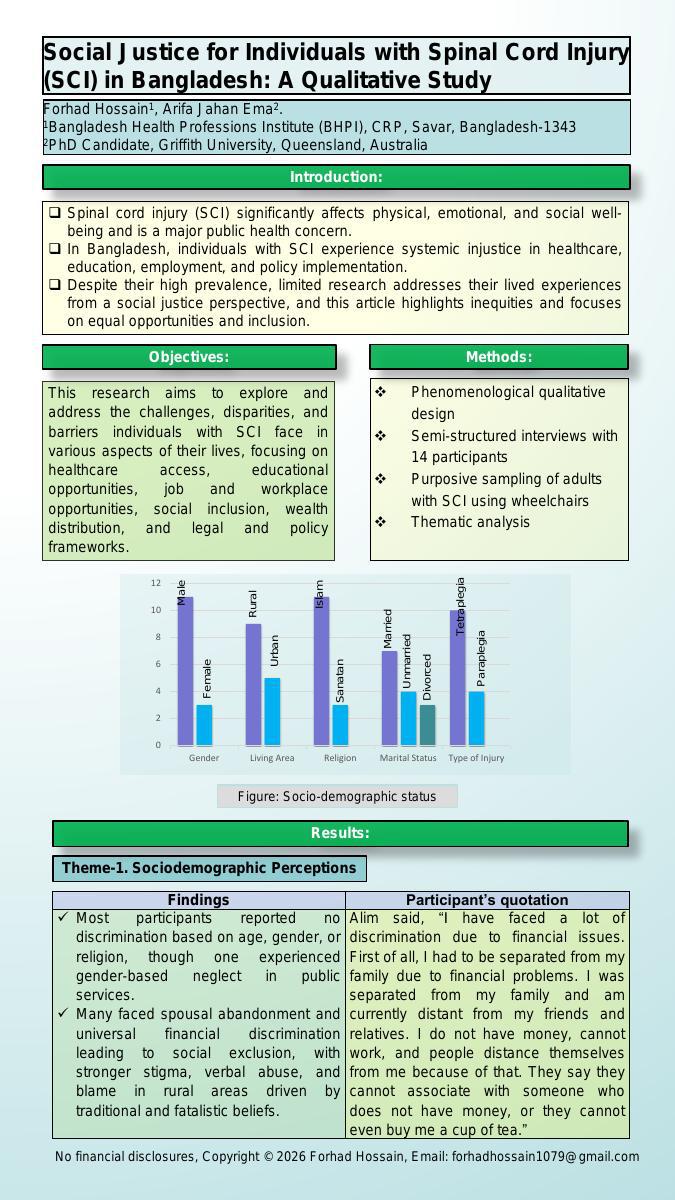
Introduction: Spinal cord injury (SCI) is a global public health concern, affecting physical, emotional, and social well-being. In Bangladesh, individuals with SCI face systemic injustices in healthcare access, education, employment, social inclusion, and policy enforcement. Despite the high prevalence, research on their experiences from a social justice perspective is limited. This article aims to understand these inequities and disparities, focusing on equal opportunities and inclusion.
Objectives: This research explores and addresses the challenges, disparities, and barriers individuals with SCI face in various aspects of their lives, focusing on healthcare access, educational opportunities, job and workplace opportunities, social inclusion, wealth distribution, and legal and policy frameworks.
Methods: A phenomenological qualitative research design was used to gain an in-depth understanding of the lived experiences of individuals with SCI. Data were collected through in-depth semi-structured interviews with 14 participants selected by purposive sampling. The data analysis in this study had used thematic analysis.
Results: The study shows the important social justice issues faced by individuals with SCI in Bangladesh, based on sociodemographic factors, healthcare access, education, employment, financial stability, and policy frameworks. Discrimination, lack of infrastructure, stigma, financial barriers, and ineffective policies exacerbate their struggles, requiring systemic reforms for inclusion and equal opportunities.
Conclusion: This study shows the need for occupational therapy professionals to develop inclusive practices to provide valuable insights for enhancing rehabilitation strategies, improving accessibility, building awareness, and promoting independence, ensuring a more equitable healthcare approach within occupational therapy practices.