
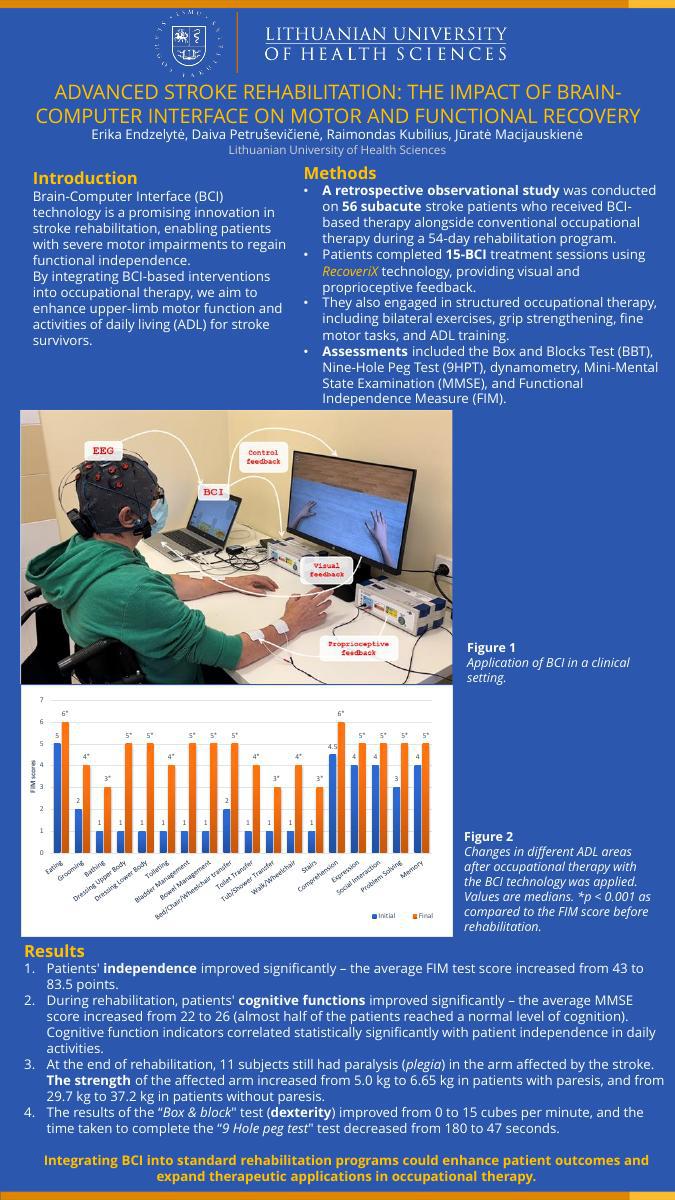
Introduction / Rationale: Brain-Computer Interface (BCI) technology is a promising innovation in stroke rehabilitation, enabling patients with severe motor impairments to regain functional independence. By integrating BCI-based interventions into occupational therapy, we aim to enhance upper-limb motor function and activities of daily living (ADL) for stroke survivors.
Objectives: This study examines the effects of BCI-assisted therapy on motor recovery, dexterity, and independence in stroke patients.
Methods / Approach: A retrospective observational study was conducted on 56 subacute stroke patients who received BCI-based therapy alongside conventional occupational therapy during a 54-day rehabilitation program. Patients completed 15-BCI treatment sessions using RecoveriX technology, providing visual and proprioceptive feedback. They also engaged in structured occupational therapy, including bilateral exercises, grip strengthening, fine motor tasks, and ADL training. Assessments included the Box and Blocks Test (BBT), Nine-Hole Peg Test (9HPT), dynamometry, Mini-Mental State Examination (MMSE), and Functional Independence Measure (FIM).
Results / Practice Implications: Stroke-affected hand strength increased from 5.0 kg to 6.65 kg (p<0.001), and FIM scores improved from 43.0 to 83.5 (p<0.001). Dexterity and cognitive function also showed significant gains (MMSE: 22.0 to 26.0). These results highlight the potential of BCI therapy in enhancing neurorehabilitation outcomes.
Conclusion / Significance to Occupational Therapy: BCI-assisted therapy improves motor recovery, functional independence, and cognition in stroke patients. Integrating BCI into standard rehabilitation programs could enhance patient outcomes and expand therapeutic applications in occupational therapy.