
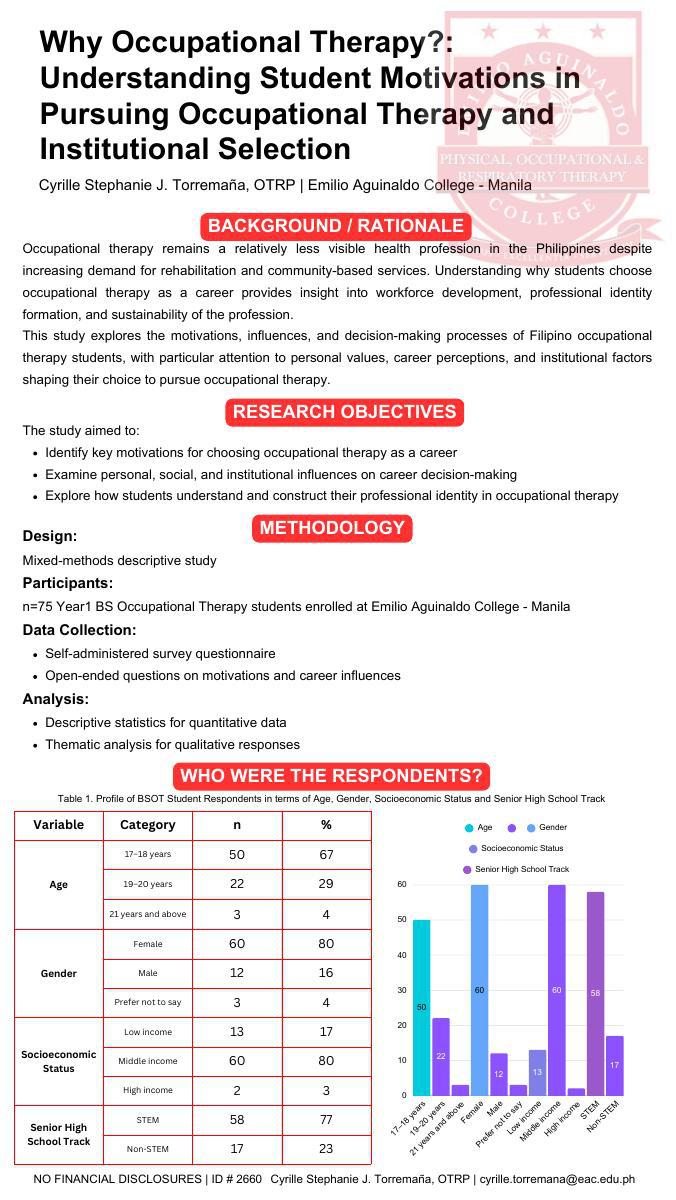
Introduction / Rationale: The decision to pursue Occupational Therapy (OT) is shaped by personal aspirations, career stability, and institutional influence. In the context of workforce development and capacity building, understanding why students choose OT and a particular Manila-based institution provides valuable insights into strengthening OT education and the future workforce.
Objectives: This study explored the motivations of first-year OT students in selecting the profession and enrolling in a single institution. It examined key factors such as perceptions of career opportunities, job stability, alignment with personal values, influence of mentors, and institutional reputation.
Methods / Approach: A mixed-methods approach was employed, utilizing structured surveys and qualitative responses from first-year OT students. Quantitative data identified trends in career decision-making, while qualitative insights provided a deeper understanding of personal motivations and institutional selection criteria.
Practice Implications: Findings highlight the importance of student-centered recruitment strategies, mentorship programs, and curriculum enhancements that align with evolving industry demands. Strengthening institutional support, fostering early professional identity formation, and ensuring alignment between student expectations and academic experiences can improve retention and workforce preparedness. Encouraging interdisciplinary exposure and practical training enhances student confidence and readiness for professional practice.
Contribution to the OT Profession: By identifying motivations for pursuing OT, this study informs evidence-based strategies for capacity building in OT education. Addressing gaps in student expectations and institutional offerings supports workforce sustainability, ensuring that graduates enter the profession with a strong commitment to its values and societal impact. Findings can guide policy improvements in student recruitment, curriculum design, and faculty development.