
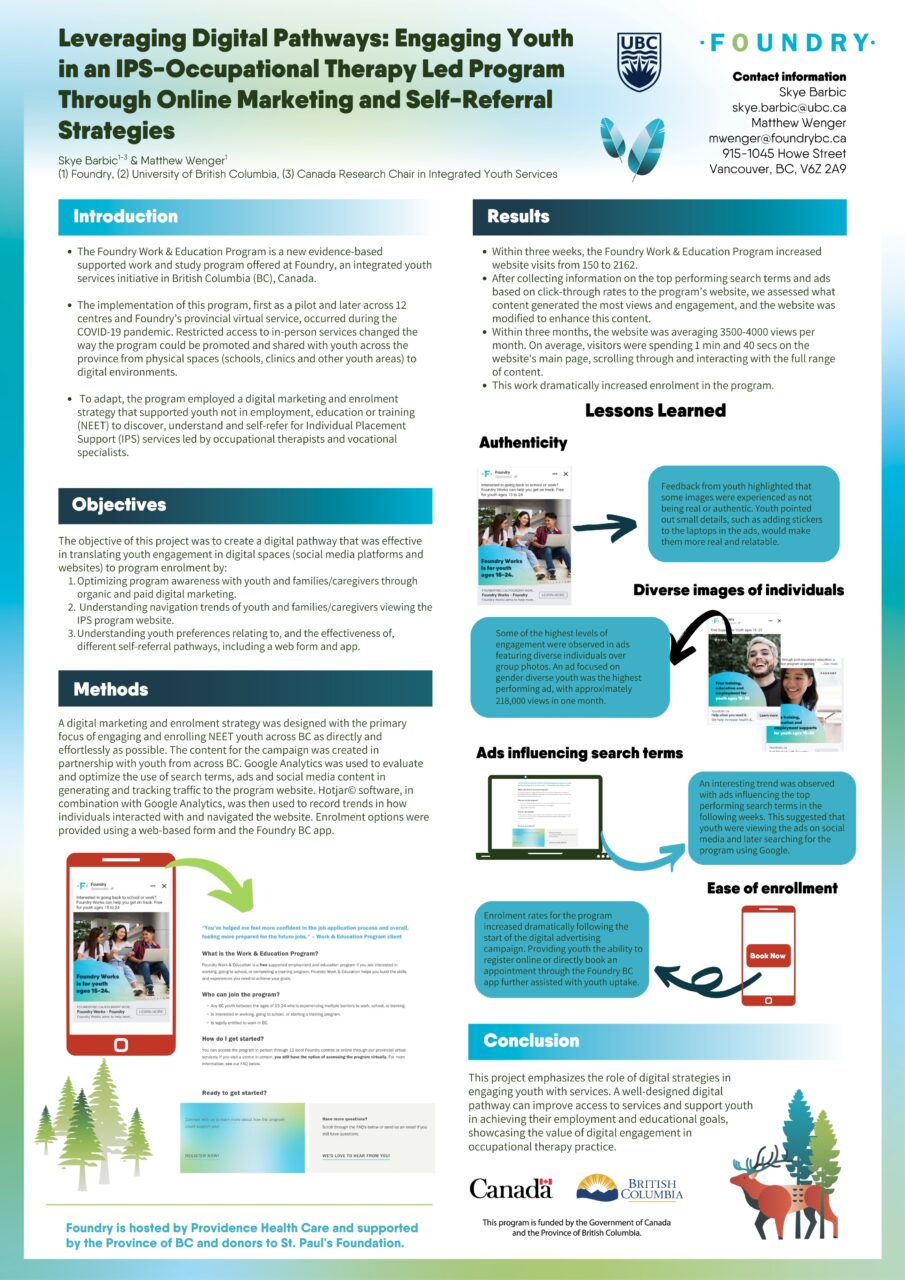
Introduction / Rationale: Foundry Works, an evidence-based supported work and study program in British Columbia, Canada, transitioned from in-person to digital platforms during the Covid-19 pandemic. The program aimed to engage youth “not in employment, education, or training” (NEET) through digital marketing and self-referral pathways, offering Individual Placement Support (IPS) services led by occupational therapists and vocational specialists.
Objectives: The project aimed to create a digital pathway for effective program enrollment by: (1) increasing program awareness through digital marketing; (2) understanding youth navigation trends on the IPS webpage; and (3) evaluating self-referral preferences using web forms and apps.
Methods / Approach: A digital strategy was designed to engage NEET youth across BC. Translation rates from search terms, ads, and social media were used to track website traffic. Tools like Hotjar© and Google Analytics monitored website interaction. Two self-referral pathways, a web form and the Foundry BC app, were compared for youth preference and effectiveness.
Results / Practice Implications: Within three weeks, website visits rose from 150 to 2,162. The program refined its digital experience based on engagement data and identified preferred self-referral pathways, improving the overall enrollment process.
Conclusion / Contribution to the Occupational Therapy Profession:This project emphasizes the role of digital strategies in engaging youth with services. A well-designed digital pathway can improve access to services and support youth in achieving their employment and educational goals, showcasing the value of digital engagement in occupational therapy practice.