
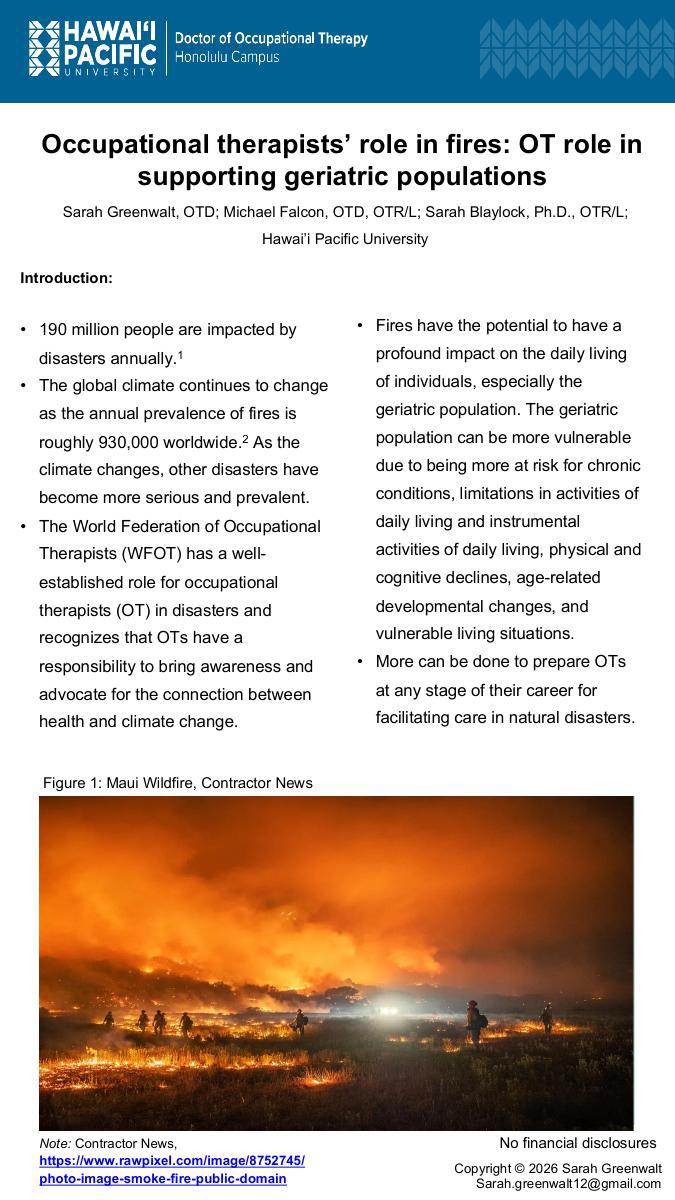
Introduction/Rationale: 190 million people are impacted by disasters annually. The World Federation of Occupational Therapists (WFOT) has a well-established role for occupational therapists in disasters and recognizes that OTs have a responsibility to bring awareness and advocate for the connection between health and climate change. The global climate continues to change as the annual prevalence of fires is roughly 930,000 worldwide. Fires have the potential to have a profound impact on the daily living of individuals, especially the geriatric population. There are limited guidelines for OTs' role in meeting the needs of geriatric populations post fires.
Objective: To identify the roles that OTs can have in meeting the needs of geriatric populations post fires.
Methods/Approach: A literature review was conducted to discover the impact of fires on geriatric populations. Data was collected from literature, surveys, and interviews with populations and healthcare workers that live and work in regions impacted by fires.
Results/Practice Implications: Fires may have a major disruption to the lives of the geriatric population; physical, socialization, family dynamics, cultural, and spiritual practices. There are connections between neurological conditions (i.e, dementia) and exposure to fires, leading to more health concerns as climate change progresses.
Conclusion / Significance to the Occupational Therapy Profession: Establishing specific guidelines for OTs’ role can prepare OTs to better serve the geriatric population post fire. Continued advocacy to identify best practice guidelines for the geriatric population post fires is critical in the changing global environment.