
Introduction / Rationale: Playspaces are vital for children's development and participation, yet inadequate design and designers' limited understanding of children's needs often make them unusable and unappealing. Engaging children as co-designers is essential to ensure playspaces meet their needs. Occupational therapists (OTs), experts in participation, environmental adaptations, and child development, can enhance inclusivity and connect children's insights with designers' practices.
Objectives: This scoping review maps literature on co-design approaches in playspace development that involve children and/or OTs. It focuses on the approaches and strategies used, as well as how children with disabilities are represented and their needs addressed.
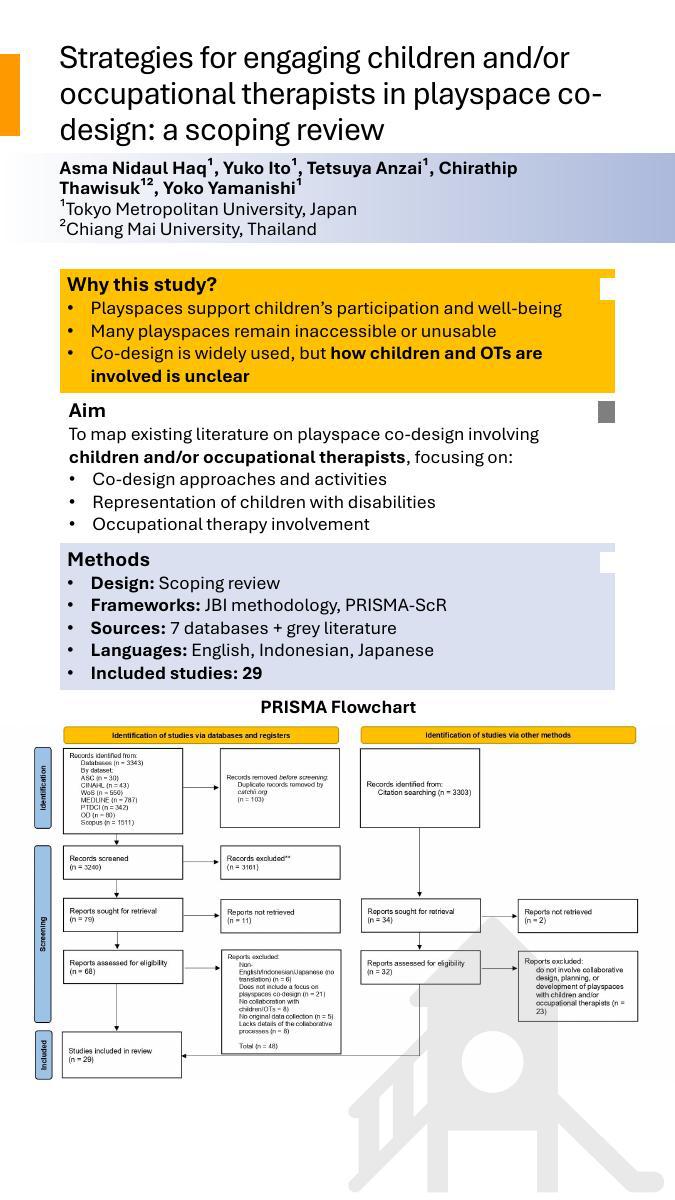
Methods / Approach: Following JBI methodology and PRISMA-ScR guidelines, we identified peer-reviewed articles and grey literature through searches in Scopus, Web of Science, MEDLINE, Academic Search Complete, CINAHL, OpenDissertation, ProQuest Dissertations & Theses Citation Index, and citation searches.
Results / Practice Implications: 30 articles were included in the review. Diverse co-design approaches emerged, such as Participatory Action Research, the Child-Friendly Cities Initiative, the mosaic approach, and various participatory workshops. These methodologies engage children through tools like drawings, photography, and model-building to capture their perspectives. However, only three studies explicitly included children with disabilities, and none documented OTs' involvement.
Conclusion / Significance to the Occupational Therapy profession: Although diverse participatory approaches are used, the lack of occupational therapy perspectives indicates an opportunity to improve playspace inclusivity and accessibility. Given the underrepresentation of children with disabilities in co-design studies, future research should explore integrating OTs into co-design processes and develop inclusive engagement strategies to better address the unique needs of all children.