
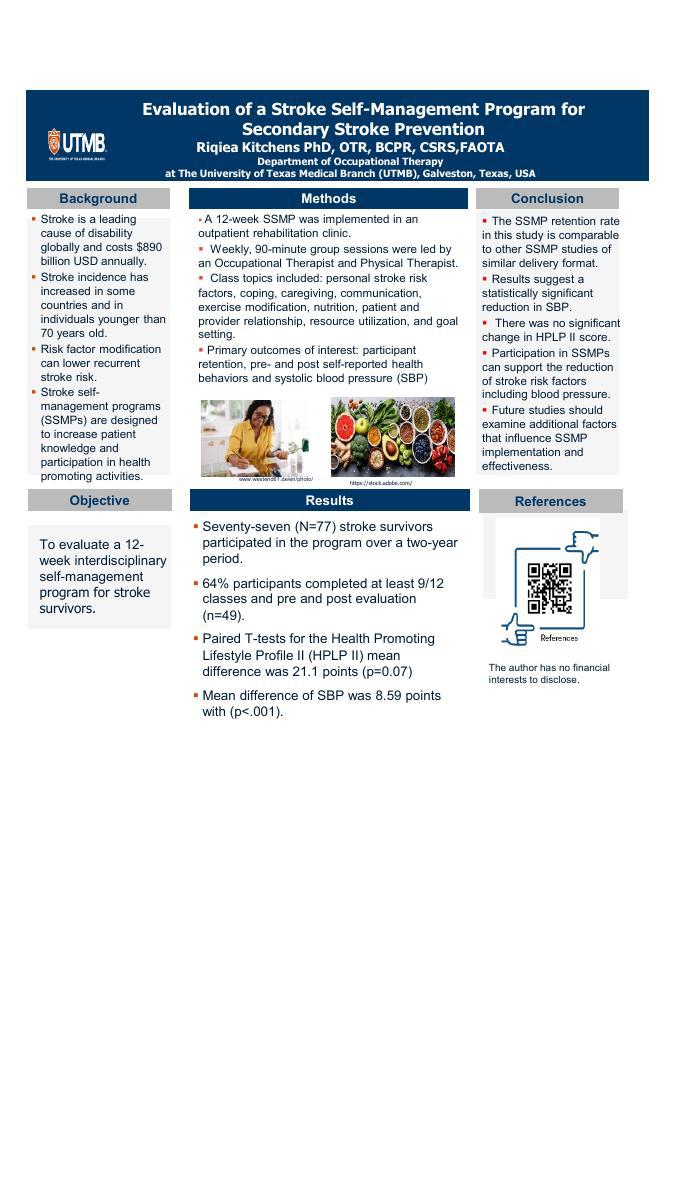
Introduction/Rationale. Stroke is the third leading cause of death and disability globally and costs $890 billion USD annually. Stroke incidence has increased in some countries with lower sociodemographic index and individuals younger than 70 years old, suggesting that current efforts to reduce strokes are insufficient. Most strokes are preventable and evidence suggests that modifying risk factors such as hypertension, obesity, and diabetes can lower risk. Self-management programs tailored to individuals with stroke are designed to increase patient knowledge and promote participation in healthful activities.
Objectives. To evaluate a 12-week interdisciplinary self-management program for stroke survivors.
Methods/Approach. A 12-week stroke self-management program was developed and implemented in an outpatient rehabilitation clinic in a large community-owned hospital in the US. Participants attended weekly, in-person, 1.5-hour group sessions led by a licensed occupational therapist and licensed physical therapist. Participants received interactive education on risk factors, coping, caregiving, communication, exercise modification, nutrition, patient and provider relationship, resource utilization, and goal setting. Pre and Post program outcomes included: The Health Promoting Lifestyle Profile II (HPLP II) and systolic blood pressure (SBP).
Results/Practice Implications. Seventy-seven (N=77) stroke survivors participated in the program over a two-year period. Survivors completing at least 9/12 classes (n=49) were included in data analysis. Paired T-tests for HPLP II mean difference was 21.1 points p=0.07. Mean difference of SBP was 8.59 points with p<.001. Results suggest a statistically significant reduction in SBP. There was no significant change in HPLP II score.
Conclusion/Contribution to the occupational therapy profession. Participation in a stroke self-management program can support the reduction of stroke risk factors including blood pressure and decrease risk for recurrent stroke.