
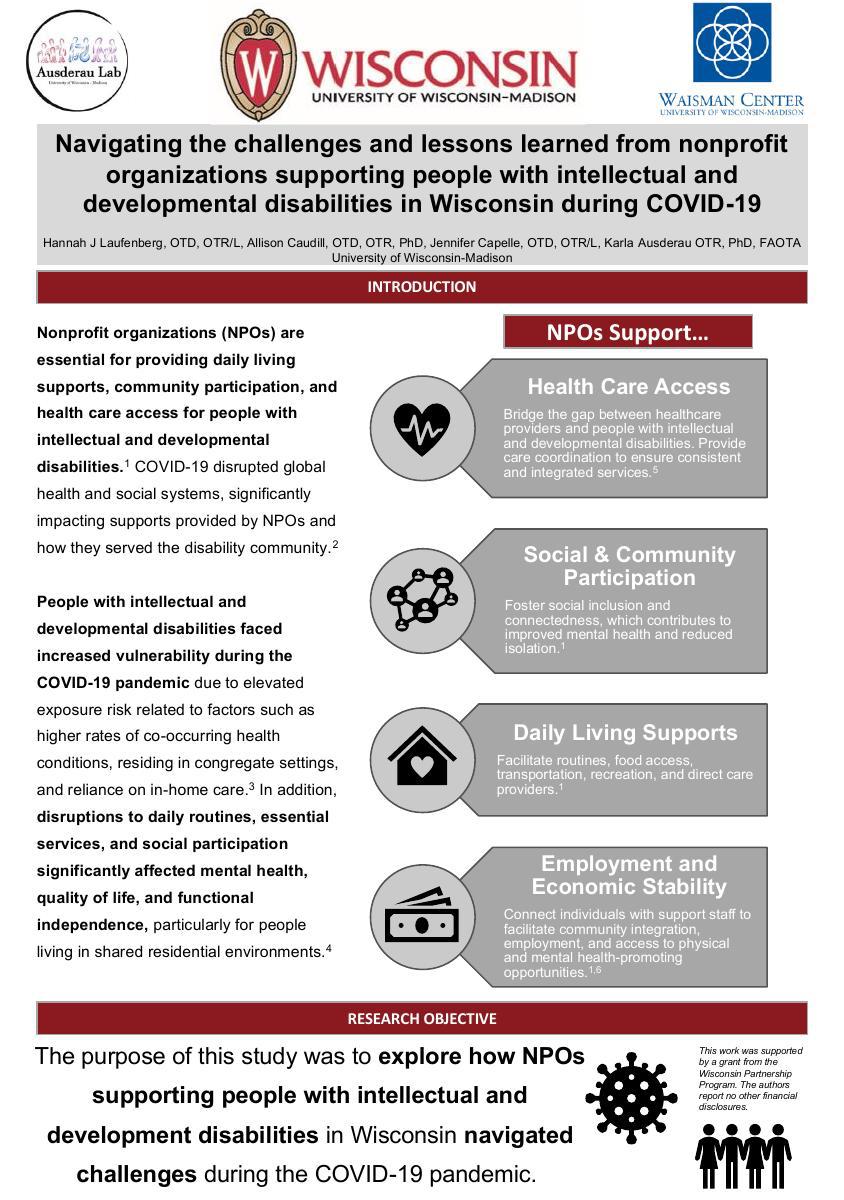
Objectives: This study aims to explore the unique challenges, innovative strategies, and invaluable lessons learned by nonprofit organizations supporting people with intellectual and developmental disabilities during the COVID-19 pandemic.
Methods: Twenty semi-structured interviews with leaders of nonprofit organizations across Wisconsin were conducted. Using thematic analysis, the transcripts were coded and categorized into overarching themes of problems, acute strategies, and solutions that persisted. The coding team used an open-coding approach to identify patterns and key concepts.
Impact / Results: The study identified several key challenges, including programming and participation issues, budget constraints, and staff-related challenges. Acute strategies implemented included safety-based changes, programming modifications, immediate staffing strategies, and community collaboration. Long-term solutions that persisted involved health and safety processes, new or virtual programming opportunities, increased focus on health and wellness, and work environment adaptations.
Conclusion / Significance to the Occupational Therapy Profession: The findings highlight the critical role of nonprofit organizations in supporting people with intellectual and developmental disabilities during crises. The study provides actionable recommendations for enhancing service continuity, fostering adaptive problem-solving, and securing sustainable funding. These insights are crucial for occupational therapy professionals involved in policy-making, advocacy, and direct service provision, ensuring better preparedness and resilience for future crises.