
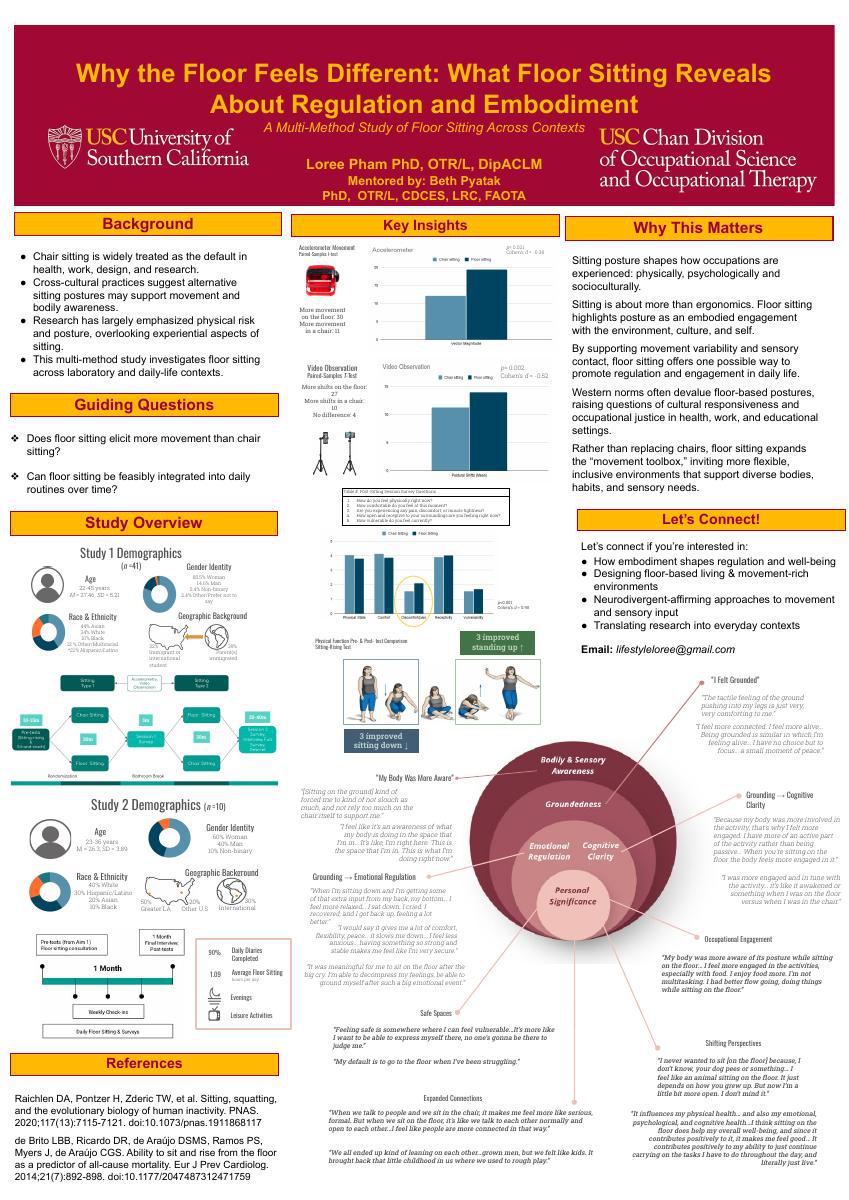
Rationale: Conventional sedentary lifestyles predominantly involve prolonged chair sitting, linked with chronic health conditions, reduced mobility, and increased musculoskeletal discomfort. Floor sitting, a common practice in various cultures, promotes varied movement and increased muscle engagement, which may mitigate these effects and is explored in this study to enhance occupational therapy practices.
Objectives: The study aims to compare the effects of floor sitting on health and well-being, emphasizing sociocultural impacts on occupational performance and engagement.
Approach: This mixed-method study was conducted in two phases: a controlled lab setting (n=40) followed by a month-long free-living phase (n=10). Each participant engaged in both floor and chair sitting sessions, in randomized order. Data collection merged quantitative methods (accelerometry and video observation) with qualitative interviews, capturing both the biomechanical and experiential nuances of sitting.
Results/Practice Implications: Preliminary qualitative findings indicate that floor sitting not only enhances physical comfort and postural dynamics but resonates with participants' cultural backgrounds and supports psychological well-being. It fosters greater bodily awareness and engagement, and participants frequently discussed the integration of floor sitting into their sociocultural activities. These results provide insights into simple yet impactful ways that occupational therapy can reduce the harms associated with sedentary behavior and prolonged sitting through the use of active resting postures.
Conclusion/Significance to the Occupational Therapy Profession: The study underscores the significance of culturally inclusive practices in occupational therapy. Recognizing and integrating diverse sitting practices, such as floor sitting, can lead to more effective, holistic approaches to health promotion and rehabilitation. This study advocates for innovative, culturally responsive practices in occupational therapy, inspiring transformative care that enhances client well-being and engagement.