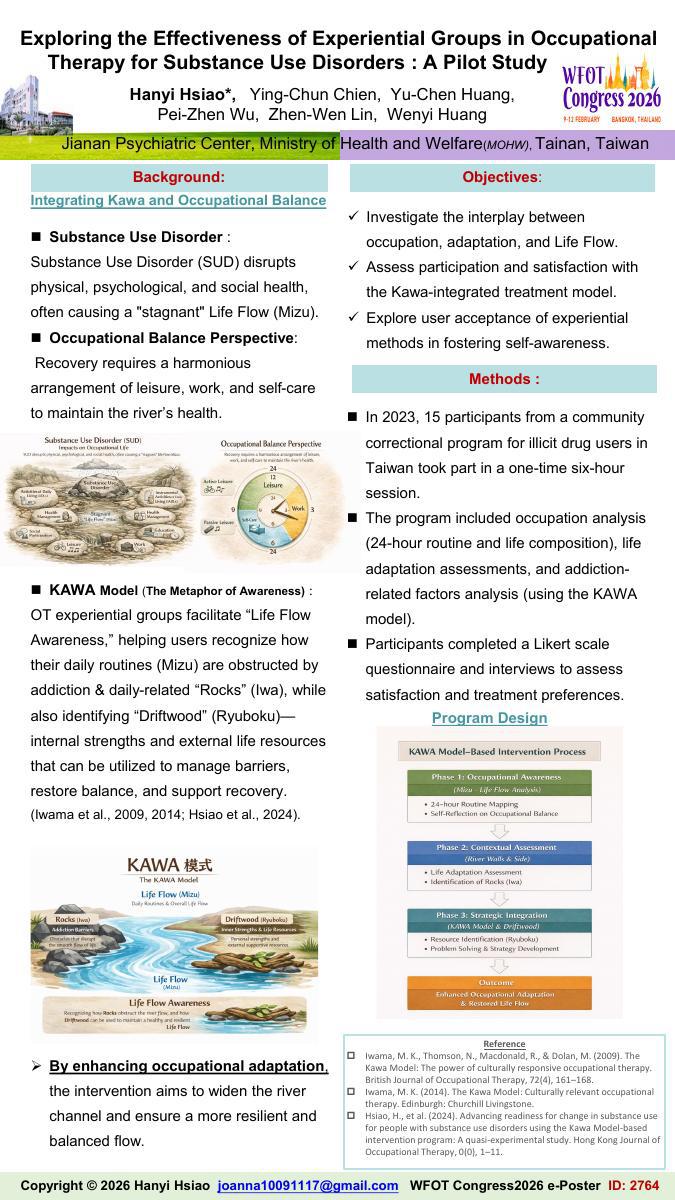
Introduction: Substance Use Disorder(SUD) impacts physical, psychological, and social health, with high relapse rates. Occupational therapy uses experiential groups to improve SUD recovery by enhancing occupational understanding and adaptation. This study explores the experiences and effectiveness of these groups for illicit drug users."
Objectives: This study seeks to: (1) Investigate the occupation and adaptation of substance users. (2) Assess their participation and satisfaction with the treatment model. (3) Explore their acceptance and preferences regarding the model.
Methods: In 2023, 15 participants from a community correctional program for illicit drug users in Taiwan took part in a one-time six-hour session. The program included occupation analysis(24-hour routine and life composition), life adaptation assessments, and addiction-related factors analysis(using the KAWA model). Participants completed a Likert scale questionnaire and interviews to assess satisfaction and treatment preferences.
Results: Two rounds of the program were conducted, with all 15 participants completing it (100% completion rate). The majority of participants used substances such as ketamine and instant coffee packets(toxic coffee packets) .While most participants did not report significant difficulties or barriers to life adaptation, they expressed interest in issues related to occupational balance, including leisure, work, and self-care. Significant elements for maintaining occupational balance included relationships with family and friends (73.33%), adherence to values and beliefs (60%), and employment (53.33%). All participants (100%) expressed satisfaction with the treatment model. They valued its engaging approach, self-awareness benefits, positive support, insights into life balance, and shared experiences.
Conclusion: The OT Experiential Group addresses the needs and preferences of individuals with SUDs. This approach fosters self-awareness of substance use habits, increases treatment motivation, and promotes occupational balance.
