
Introduction / Rationale: The prevalence of Cerebral palsy (CP) in low-and-middle-income countries(LMICs) is significantly higher than that of high-income countries. Children with CP face challenges impacting their activity and participation. Rehabilitation is the principal management for children with CP. Caregivers can be trained to deliver allied health therapy interventions and achieve a significant outcome.
Objectives: This systematic review aims to evaluate the effectiveness and feasibility of caregiver-delivered allied health interventions, that aim to improve activity and participation outcomes of children and youth with CP in LMICs.
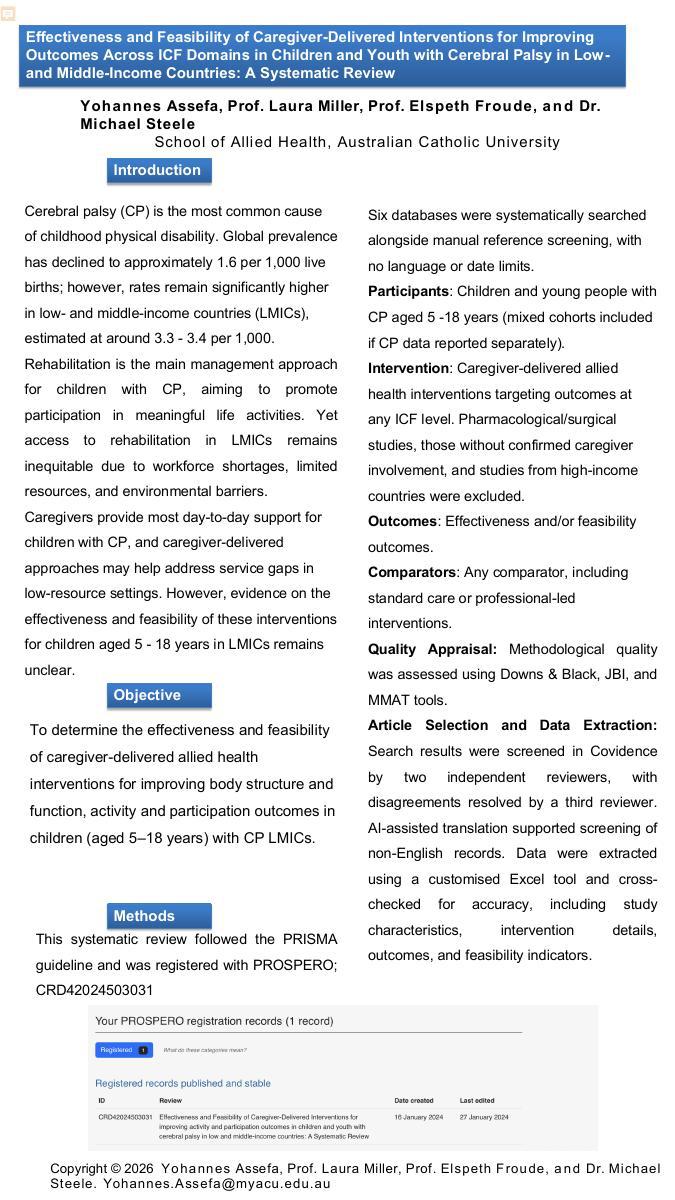
Methods / Approach: Six databases were systematically searched. Studies evaluating the effectiveness and feasibility of caregiver-delivered allied health interventions for children with CP aged 5-18 years living in LMICs were included. Two authors independently conducted abstract and full-text screenings. Methodological quality of all included studies was assessed using the Downs and Black checklist (for quantitative studies) and the JBI Critical Appraisal Checklist (for qualitative studies).
Results / Practice Implications: The search yielded a total of 6 studies. Although the caregivers’ involvement in providing the therapy was not explicitly detailed in most of the studies, they were trained by therapists in handling techniques, ADL, communication strategies, and feeding, which they implemented in their children's everyday routines. Caregiver-delivered therapy demonstrated better outcomes in improving children’s ADL compared to the Bobath technique. Caregiver-implemented AAC interventions enhanced children's body structure, function, and participation. Furthermore, parents who engaged in implementing interventions with their children saw improvements in their children's participation and goal achievement rates.
Conclusion / Contribution to the occupational therapy profession: Overall, it was noted that caregivers' involvement was minimal, but their impact was promising in LMICs.